Author Archives: Michael Happy

Frye and Martin Amis

rachel

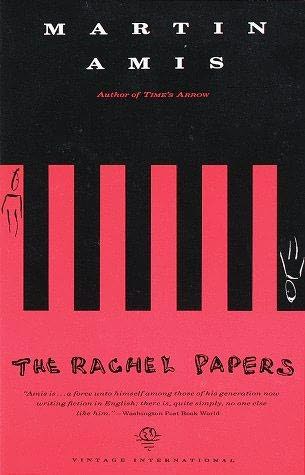
It’s really interesting to read in Russell’s earlier post that Martin Amis considered attending U of T in 1971 to study with Frye before publishing his first breakout novel, The Rachel Papers, in which Frye plays an integral part in the protagonist Charles Highway’s intellectual development.  It’s been a very long time since I’ve read the novel, but if I remember correctly, Highway must read Frye more or less under the covers, in secret: it is completely symptomatic of a time when Frye had somehow become anathema to the British idea of literary scholarship.  I know I’m a partisan, but I’d still say that in the long run, the British lost out in the bargain.  When the Franco-American poststructuralist tide was rising in the 1980s, the English school had very little to fight back with on literature’s behalf, and the lingering Leavisites certainly weren’t going to get the job done.

Frye also appears regularly in Amis’s critical writings, and is part and parcel with the contrarian badboy outlook that continues to carry him as both an author and a critic.  (One of his best observations is that a literary critic’s most essential attribute is a spine: something to tingle when tingling is the required response.)  Anyone interested in getting a sense of Frye’s influence on Amis should check out his excellent collection of articles and reviews, The War Against Cliche.

Still More Oedipal Archetypes

crying

From Peter Yan:

Forgive me Russell for one more Oedipal reference to Greek Mythology itself. The Father killing Son and vice-versa begins in the Creation Myths where Cronus kills Uranus, Zeus threatens Cronus, and Prometheus is tortured by Zeus for giving fire to his creation, Man. Moreover, Frye tells us that the myth of the crucifixion means anyone who says they are God will be killed, as no society can bear a perfect being.

From Bob Denham:

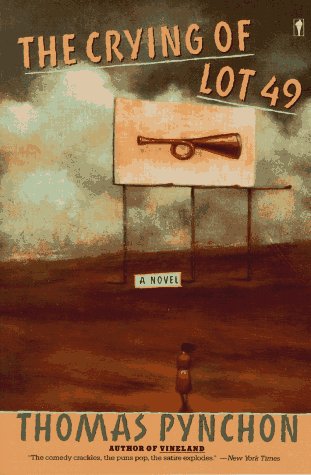
Then there’s Thomas Pynchon’s The Crying of Lot 49, which Frye refers to thrice in his writing, though not with an eye toward the Oedipus parallels.

More Spielberg and the Bible

the_color_purple1

Responding to Russell Perkin and Peter Yan:

It’s the eve of a long weekend, and I’m giddy enough to want to play the game until everyone’s heartily sick of it.

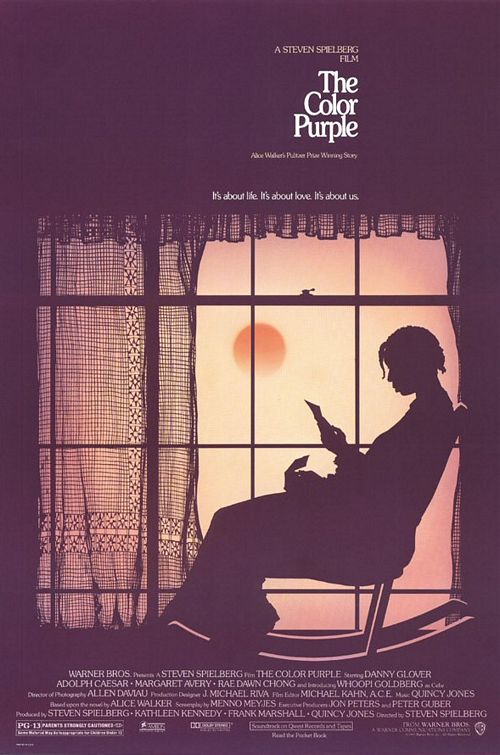
Okay, Spielberg’s Munich: maybe the Book of Judges?   And The Color Purple: it’s been 20 years since I’ve seen it, but maybe Exodus? (But then Exodus is always a safe bet, right?)

Extended clips from Munich after the break.

Continue reading

Re: Russell Perkin’s Response to “Beyond Suspicion”

emphasis 

It’s interesting, Russell, that we’ve both said in separate posts this past week that the issues we are addressing come down to a matter of “emphasis.”  For you, what needs to be emphasized is that Frye seems “to downplay the difficulty” of achieving what Gadamer characterizes as the “fusion of horizons” between literature and life.  As you go on to observe, “What [Frye] calls anxieties may be the product of painful experience that cannot be readily cast aside.”  Earlier in the week, meanwhile, I said in response to a post by you that what needs to be emphasized is the priority of literary over ideological meaning, of centripetal over centrifugal reference.

It seems therefore that the difference in emphasis really does account for the apparent divide between us.  To my eyes, what you say about ideology, anxiety, and the potential for misrepresentation of a literary text in the classroom (The Taming of the Shrew once again standing duty on the issue) only does an end run around what Frye is trying to get us past.  If we insist on the primacy of ideological anxiety, whatever its source, we only perpetuate that anxiety.  This is what I mean when I say that all of our limitations when it comes to literature are self-imposed.  As Joe illustrates very concretely in his post yesterday, the centripetal direction of literary meaning is the revelation of primary concern, and that is what literature is saying when it is otherwise saying nothing about what we ought, must, are obliged or compelled to believe as a matter of our prevailing ideological anxieties. 

In The Educated Imagination Frye observes that the purpose of a “liberal education” centred around the study of literature is to liberate.  We are, as Blake says, enchained by mind-forged manacles.  The source of our freedom lies in the perception that we ourselves serve interchangably as master and slave, and no verbal context offers such a perception more comprehensivley than literature precisely because it is not ideological in reference, and because it is motivated by concern rather than compelled by anxiety.

You suggest that some “anxieties may be the product of painful experience that cannot be readily cast aside,” and that may very well be true, as far as it goes.  But just because some anxieties cannot be readily cast aside does not mean that they cannot ultimately be cast aside.  None of this is merely given to us.  The human creative endeavor is fraught with our frailty and failings.  But any notion of human “progress” has an implicit teleology, and in Frye’s case it is the revelation of primary concern, which is, like the gestalt of literal metaphor (the centripetal foundation of all verbal meaning), a universal condition that is individually experienced and expressed. 

Apocalypse, says Blake, relates to the perceiver and not to the perceived.  It is the distinction Frye makes in The Great Code between “panoramic” and “participating” apocalypse.  Only the latter is a source of liberation, and that is up to each of us, one at a time, and at just about any time of our choosing.  But first we have to become aware that it is available to us because we are the source of it, as evidenced by our ongoing acts of creation and recreation manifesting the emergence of primary concerns over ideological ones.  And that, evidently, is the “intensified” state of consciousness Frye suggests in Words with Power is the aim of all critical endeavor.  However, our consciousness cannot be so intensified if it stubbornly entangles itself in a state of ideological anxiety, which is as self-defeating as it is self-perpetuating.

“Updike has psoriasis”

httpv://www.youtube.com/watch?v=LgmvbbWM_Z0

Anyone who has seen Todd Solondz’s scabrous Storytelling knows that it’s an uneven but still unsettling satire of the “post-modern condition.” The hapless “documentary film-maker” of the movie’s second half, “Non-Fiction,” hollowly boasts that he intends to get Jacques Derrida to narrate his latest project.  The first half of the movie, meanwhile, “Fiction,” takes place in an English department where the passive-aggressive politics of shame and resentment roil pointlessly in the seminar room.  Perhaps the clip above is something like the seminar-in-hell Clayton Chrusch imagined for himself last week.

Another, more horrific clip, after the break.

Continue reading

Re: “Celebrity Scholars”

sokal_article

Responding to Russell Perkin:

We seem to be living in an age of sharply diminishing returns when it comes to literary scholarly relevance, let alone “celebrity.”  The “public scholar” is a curio now, a quaint holdover from an earlier age — when someone like Frye, for example, could boast of talking over the heads of his peers to the general reading public, and quip that while he believed in scholarly “rigor”, he was always concerned it might become “rigor mortis.” 

The turning point seems to have been the mid to late 1990s when the market in academic incoherence was reaching its surreal height, and notoriety took the place of celebrity.  First there was the Sokal hoax. Physicist Alan Sokal (above) strung together some poststructuralist gibberish in a paper with the all too familiar sounding title, “Transgressing the Boundaries: Towards a Transformative Hermeneutics of Quantum Gravity”, which was then duly published in the journal Social Text.  In announcing the hoax, Sokal said of his fraudulent paper that it was merely “a pastiche of left-wing cant, fawning references, grandiose quotations, and outright nonsense”, which was “structured around the silliest quotations [he] could find about mathematics and physics” made by postmodernist academics. 

At about the same time, the journal Philosophy and Literature was holding its annual Bad Academic Writing contest, whose eminent winners included Judith Butler, Homi Bhabha and Frederic Jameson.  Here is editor Denis Dutton explaining the purpose of the competition:

The pretentiousness of the worst academic writing betrays it as a kind of intellectual kitsch, analogous to bad art that declares itself “profound” or “moving” not by displaying its own intrinsic value but by borrowing these values from elsewhere. Just as a cigar box is elevated by a Rembrandt painting, or a living room is dignified by sets of finely bound but unread books, so these kitsch theorists mimic the effects of rigor and profundity without actually doing serious intellectual work. Their jargon-laden prose always suggests but never delivers genuine insight. Here is this year’s winning sentence, by Berkeley Prof. Judith Butler, from an article in the journal Diacritics:

The move from a structuralist account in which capital is understood to structure social relations in relatively homologous ways to a view of hegemony in which power relations are subject to repetition, convergence, and rearticulation brought the question of temporality into the thinking of structure, and marked a shift from a form of Althusserian theory that takes structural totalities as theoretical objects to one in which the insights into the contingent possibility of structure inaugurate a renewed conception of hegemony as bound up with the contingent sites and strategies of the rearticulation of power.”

To ask what this means is to miss the point. This sentence beats readers into submission and instructs them that they are in the presence of a great and deep mind. Actual communication has nothing to do with it.

What seems to underlie this kind of phenomenon is a contempt for the non-specialist reading public, and that contempt has been returned.  Whenever you hear the banshees at Fox News howling about an “America-hating liberal elite,” you can be pretty sure the kind of people they have in mind. Universities are now mocked on the right as “islands of repression in a sea of liberty,” which of course is an ugly lie, but it’s a lie with just enough truth in it to gin up the anger on all sides.

In fact, it’s hard not to wonder whether the current sharp rise of demagoguery on the right is the result of the decline of the public scholar.  Frye called the university the engine room of society.  In what used to be known as the Humanities at least, the engine has been hacked at with crowbars for the last thirty years by self-declared iconoclasts and comfortably tenured revolutionists.  It may be that the steadily waning influence of this generation of scholars will have to collapse in on itself completely — the way the old Soviet Union did — before something better can take its place and a scholarship with a wide general audience can re-emerge.  Until then, maybe the best we can hope for are quasi-academic polemicists, like Naomi Klein.