Author Archives: Michael Happy

Today in the Frye Diaries, 11 September

 freud

1942:

 [104] Restless & at a loose end, besides being full of shit owing to my giving Helen breakfast in bed & lying down to eat it with her. At a loose end, bitching the day apart from a memorandum for the Retreat discussion on 27th, which [Walter] Brown has asked me to take. I had Jessie [Macpherson] to lunch yesterday to see if she had any ideas about it: she hadn’t. I don’t know why I’ve written down “at a loose end” twice, unless it’s a Freudian wish I had one.

[Note: Both Brown and Macpherson were university administrators.]

Re: Perkin and Nicholson

socrates

As Russell points out in the post below, it is undeniably true that Frye regularly describes himself as a “bourgeois liberal intellectual” — and, at least once in the notebooks (I think) cheekily adds, “and therefore the flower of humanity.”

But is this an either/or situation? Frye, of course, prefers “both/and” formulations, and might prefer it here too. The self-proclaimed bourgeois liberal also concludes “The Beginning of the Word” (his Ontario Council of Teachers English Keynote Address) with this wittily apt analogy whose vintage is unmistakably the counter-culture of the 1960s (so superbly evoked earlier today by Bob Rodgers):

At his trial Socrates compared himself to a midwife, using what for that male-oriented society was a deliberately vulgar metaphor. Perhaps the teacher of today might be called a drug pusher. He hovers furtively on the outskirts of social organization, dodging possessive parents, evading drill-sergeant educators and snoopy politicians, passing over the squares, disguising himself from anyone who might get at the source of his income. If society really understood what he was doing, there would be many who make things as uncomfortable as they could for him, though luckily malice and stupidity often go together. When no one is looking, he distributes products that are guaranteed to expand the mind, and are quite capable of blowing it as well. But if Canada ever becomes as famous in cultural history as the Athens of Socrates, it will be largely because, in spite of indifference or philistinism or even contempt, he has persisted in the immortal task granted only to teachers, the task of corrupting its youth. [On Education 21]

Today in the Frye Diaries, 10 September

 glasskey

1942:

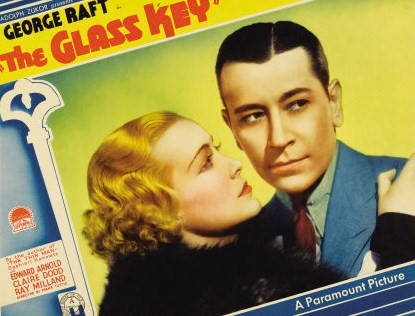
[103] The hay fever seems to have passed meridian: maybe I’m just getting asthma & I shall regret ever having given up hay fever. Got check today, the incredible sum of $165.11: I thought with the new tax it would be far less. So went to the Eglinton, meeting Saunders on the way, who said he thinks Jenny’s job is some for of counter-espionage (he said “National Research Council” to me), to see a new Dashiel Hammett, “The Glass Key.” Beautifully paced, very well acted, directed & photographed: a swell tough and utterly amoral movie about a successful, ruthless & quite likable Tammany gangster. A curious color-cartoon, on the invasion of Holland, done in puppets.


Jonathan Allan on “Disciples”

 anxiety

Regarding Michael Sinding’s earlier post on Frye and the Curriculum, Jonathan Allan makes this interesting observation:

Another aspect of this discussion, perhaps, is the place of Frye’s early “disciples” or critics deeply influenced by Frye. Fredric Jameson in his recent book, Archaeologies of the Future, reluctantly admits the importance of Frye: “Any reflection on genre today owes a debt — sometimes an unwilling one — to Northrop Frye’s Anatomy of Criticism” (257 n.3). The other central example being Harold Bloom whose anxiety of influence seems to have completely taken him over (something Frye noticed already in the late 70s). In his introduction to the latest Princeton edition of the Anatomy, Bloom writes: “I am not so fond of the Anatomy now, as I was more than forty years ago, but I probably absorbed it in ways I can no longer apprehend” (in Anatomy vii). In 2009, in the Hopkins Review, he writes: “Now, at seventy-eight, I would not have the patience to read anything by Frye” (27). Thus, a query that seems to be part of this is why these critics have left Frye behind or distanced their work from Frye’s work.

Today in the Frye Diaries, 8 September

 smith

At this point the 1942 diary is the only one of Frye’s diaries that continues past the first week of September.

1942:

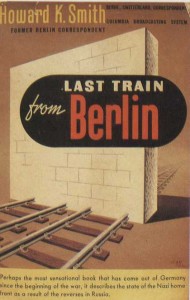
[101] Howard Smith has a book out: “Last Train From Berlin.” Howard was a very likeable boy, frank and open-minded in the best American way, somewhat naive, & a little sentimental, as Americans are. He is one of those who are so unwilling to be cynical that they tend to lack humor. I remember his showing me some Russian kopecks with “Workers of the World Unite” on them and saying: “Now have the Russians forgotten the world revolution?” I said something about the profound Christianity indicated by the “In God We Trust” on American coins and he laughed, though somewhat unwillingly.

[Bob Denham’s note, page 684, CW vol. 8: “Smith, who later became a well-known CBS commentator, was a Rhodes Scholar at Merton College, during the time NF studied there.  NF is apparently remembering this incident from their student days.”]

Today in the Frye Diaries, 7 September

 family

1942:

 Read Peter Quennell‘s “Caroline of England,” mostly out of the Harvey Memoirs, but intelligent and well written. It would be an amusing idea to write a skit on an English professor waking up in, say, Pepys’ time and trying to get hold of the language and customs. You’d have to know your stuff, but it would make good if somewhat obvious slapstick.

1950: A harrowing bus trip to New York City, plagued by hay fever all the way.

[590]… A tickly throat is a new misery to contend with, and one that give me a bad case of stage fright I wouldn’t otherwise have. I wish I didn’t associate New York so persistently with hay fever.

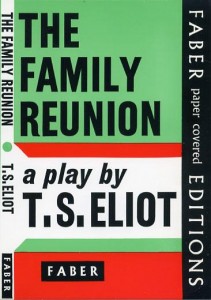
Note that this is Frye’s last diary entry for 1950.  Bob Denham’s endnote in CW volume 8, page 743, reads: “Among NF’s extant diaries none records his activities for an entire year. NF might have continued to write in this diary had he not, following the English Institute meeting, 8-11 September at Columbia University, broken his right arm in an automobile accident. The Fryes and Philip Wheelwright, the driver of the car, were on their way from New York to Princeton to see a production of Eliot’s Family Reunion when the accident, which hospitalized NF for a week, occurred. See Ayre, 226.”
Today in the Frye Diaries, 6 September

teenagers

1942: The difficulties with cultivating the young.

[98] A cousin of Helen’s living in Forest dropped in. Interested in music, & apparently planning to teach it. Asked her what she was working on & she said “Grade Ten.” Probed further & she said “Beethoven.” “One of the sonatas?” I suggested. “Guess so,” she said. She has a voice like a kitchen stove falling downstairs. I can’t understand the superstitious & barbaric notion in this country that it’s sissified to to cultivate an accent. The idea that correct & well-modulated speech is a fundamental cornerstone of culture doesn’t occur to my students, many of whom make noises like the cry of the great bronze grackle in the mating season. As it isn’t part of one’s education, I can’t teach it: I’m just the best friend who won’t tell them. The Yankee method of talking through the nowse and hawnking like a fahghowrrn is very widespread; some whine like flying shells, some mutter like priests, some chew & gurgle like cement mixers. Ten minutes of frank talking to this girl and I could raise her several notches in the scale of culture: she’s a bright kid and can take things on.

Aspects of this complete diary entry were included and expanded in “Reflections at a Movie,” Canadian Forum 22 (October 1942). The entire article can be found at the above link, reproduced in the Collected Works, volume 11, edited by Jan Gorak.

1950: No entry.