Author Archives: Michael Happy

Laurence Olivier

httpv://www.youtube.com/watch?v=5ks-NbCHUns

The “To be or not to be” soliloquy from Olivier’s Hamlet

Today is Laurence Olivier‘s birthday (1907 – 1989).

Frye on New Year’s Eve 1948 records in his diary his impressions of Olivier’s film version of Hamlet:

Went to see the Laurence Olivier Hamlet this afternoon — its eleventh filming, according to the program.  As Olivier directed the film & played Hamlet too, it was still the subjective fallacy, the conception of the play which derives from the accident that Hamlet is a fat actor’s role, not in the least scant of breath.  In any production the actor who takes Hamlet’s part has a lot to say about the production, & his first care is usually to ensure that if any part is cut it won’t be his.  Olivier wasn’t crude about it: he slashed the soliloquies to ribbons & turned it into a play of action.  The subjective fallacy showed up chiefly in his treatment of Ophelia–he manipulated her part to make her just the “anima” of Hamlet, & deliberately cut out her mature intensity of feeling & her sharp sly humor.  Consistently with this he made her death pure accident, thus making all the references to her “doubtful” death in the fifth act entirely pointless.  The foils to Hamlet were also weakened — Laertes of course has a very badly written part, but the stability of Horatio was hardly in evidence & Fortinbras was abolished altogether, along with those dismal robot clowns Rosencrantz & Guildenstern.  On the other hand, the king & queen were fully & excellently treated.

Hamlet is not about Hamlet at all, but about a situation into which Hamlet fits, and all attempts to treat the play as though it were primarily a character study of Hamlet destroy the symmetry of the play.  For one thing, one needs all the rich counterpoint of the Polonius family, which plays the same role in Hamlet that the Gloucester family does in Lear.  We have to see this subplot from its own perspective as well as from Hamlet’s.  Ophelia corresponds to Gertrude, & her attraction toward Hamlet is, from Polonius’ point of view, a desertion to vice, just as Gertrude’s attraction toward Claudius is from Hamlet’s.  The father-daughter hold here is as palpable as the bigger mother-son one.  But more important, Hamlet is not a play about Hamlet’s indecision, but about the ritual element in revenge.  In Hamlet the stimulus to revenge takes the creative form of the play: in Claudius it takes the form of a ritual sword-dance, a Druidical drama punctuated with choruses of toasts & cannon shots.  But the question “why did Hamlet delay?” is no more important to the play than the question “why did Claudius delay?” for Claudius also has shallow excuses and self-analyzing soliloquies.  There is something comic in the elephantine fumbling on both sides, especially in the fourth act.

There were excellent things in Olivier’s version, though: the winding stair & the general Piranesi setting, Hamlet as the Orc-hero brandishing the torch in Claudius’ face, a grotesque little wooden statue of Christ to which Claudius prays, the use of the cross on the sword-hilt in the Hamlet-Ghost scene, the whole Saturnalia or Balshazzar’s feast aspect of Claudius’ revels.  The camera, by pushing closer to the characters, brings out the horror of tragedy the stage plays often gloss over, & reminds us that tragedy is after all about people getting hurt.  (CW 8, 42-3)
Frye Alert

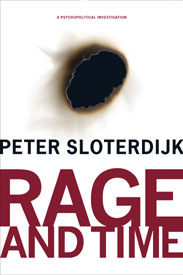
rage

Scott Maclemee in The National, an English-language newspaper published in Abu Dhabi, reviews Peter Sloterdijk’s Rage and Time: A Psychopolitical Investigation, and cites Frye to make sense of the unusual genre that Sloterdijk writes in.

That genre is the anatomy, a rambling prose form that now seems old-fashioned. The locus classicus is Richard Burton’s The Anatomy of Melancholy, but the label also covers works of fiction such as Jonathan Swift’s satires and Aldous Huxley’s novels. “At its most concentrated,” writes Northrop Frye, the form “presents us with a vision of the world in terms of a single intellectual pattern” that is the product of a particular temperament or psychic state. There is always something wild and excessive about how ideas are developed in an anatomy; it’s as if an encyclopaedia were having a nervous breakdown. The anatomist – to continue quoting from Frye’s own Anatomy of Criticism – “shows his exuberance in intellectual ways, by piling up an enormous mass of erudition about his theme or in overwhelming his pedantic targets with an avalanche of his own jargon.”

The entire review can be read here.

TGIF: The Reduced Shakespeare Company

httpv://www.youtube.com/watch?v=zE9tNBWZ7Hw

The unlikely alignment of Shakespeare anniversaries this week — the first publication of the sonnets yesterday, the death of John Gielgud today, and the birth of Laurence Olivier tomorrow — deserves some sort of commemoration.  So how about the Reduced Shakespeare Company performing Hamlet in under 3 minutes?  And then, for good measure, performing it backwards.

John Gielgud

httpv://www.youtube.com/watch?v=vtuoNCfbnYM

On this date John Gielgud died (1904 – 2000).

In a letter to Frye in January 1935, Helen Kemp mentions having seen Gielgud’s Hamlet in London, a celebrated production which he also directed.  There is, of course, no recording of that performance, but the clip above is still very fitting: the elderly Gielgud in his last leading film role delivering Prospero’s Epilogue from The Tempest, featured in Peter Greenaway’s adaptation of the play, Prospero’s Books.

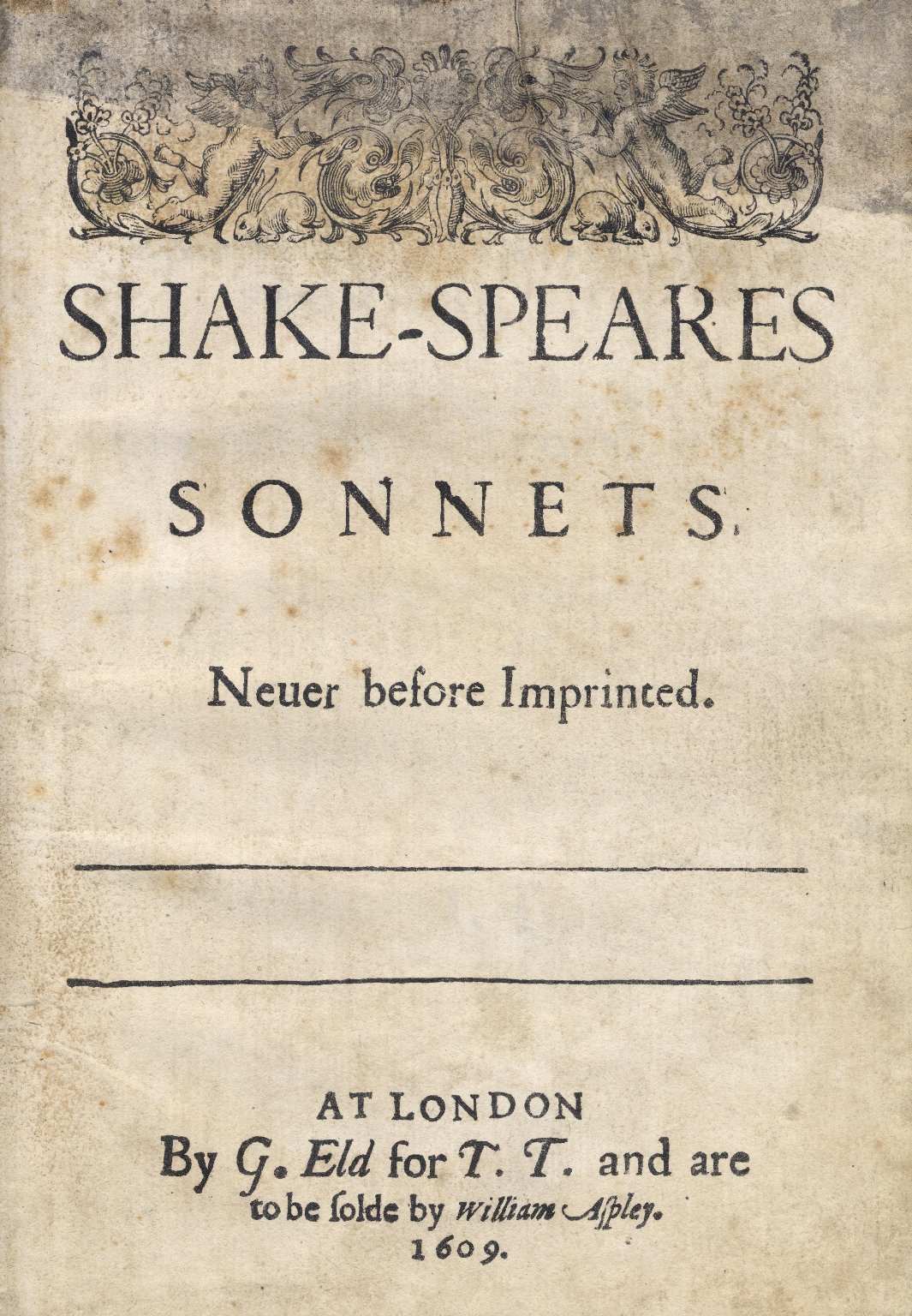
Shakespeare’s Sonnets

SonnetsQuarto001356

On this date in 1609 Shakespeare’s sonnets were published for the first time.

Frye in “How True a Twain”:

What one misses in Shakespeare’s sonnets, perhaps, is what we find so abundantly in the plays that it seems to be Shakespeare’s outstanding characteristic.  This is the sense of human proportion of the concrete situation in which all passion is, however tragically, farcically, or romantically, spent.  If the sonnets were new to us, we should expect Shakespeare to remain on the human middle ground of Sonnets 21 and 130; neither the quasi-religious language of 146 nor the prophetic vision of 129 seems typical of him.  Here again we must think of the traditions of the genre he was using.  The human middle ground is the area of Ovid, but the courtly love tradition, founded as it was on a “moralized” adaptation of Ovid, was committed to a psychological quest that sought to explore the utmost limits of consciousness and desire.  It is this tradition of which Shakespeare’s sonnets are the definitive summing-up.  They are a poetic realization of the whole range of love in the Western world, from the idealism of Petrarch to the ironic frustration of Proust.  If his great predecessor tells us all we need to know of the art of love, Shakespeare has told us more than we can ever fully understand of its nature.  He may not have unlocked his heart in the sonnets, but the sonnets can unlock doors in our minds, and show us that poetry can be something more than a mighty maze of walks without a plan.  From the plays alone we get an impression of an inscrutable Shakespeare, Matthew Arnold’s sphinx, who poses riddles and will not answer them, who merely smiles and sits still.  It is a call to mental adventure to find in the sonnets the authority of Shakespeare behind the conception of poetry as a marriage of Eros and Psyche, an identity of a genius that outlives time and a soul that feeds on death. (Fables of Identity, 105-6)

Bryan Ferry‘s musical adaptation of Sonnet 18 after the jump.

Continue reading

Pete Townsend

httpv://www.youtube.com/watch?v=h3h–K5928M&feature=fvst

Today is Pete Towsend‘s birthday (born 1945).

When it comes to The Who, there are any number of songs that could be posted (and, damn, it’d be nice to put up just about any track from Who’s Next).  But this early promotional video for an early hit, “I Can’t Explain”, is especially charming (and of extraordinarily good quality).  It’s 1965.  The Beatles are playing concerts to thousands of screaming girls.  The Who, meanwhile, judging by this video, are drawing crowds of unsmiling boys who take their rock ‘n’ roll very seriously.  And that pretty much sums it up.

Django Reinhardt

httpv://www.youtube.com/watch?v=-iJ7bs4mTUY

On this date the legendary gypsy jazz guitarist, Django Reinhardt, died (1910 – 1953).

Reinhardt could only play with the first two fingers on his left hand, the other two having been crippled in a fire.  And yet, as you’ll see and hear in the clip above, he could do more with those two fingers than most people can do with all four.