Author Archives: Michael Happy

What’s Wrong with the New York Times? (3)

david-brooks3 Thomas_Friedman

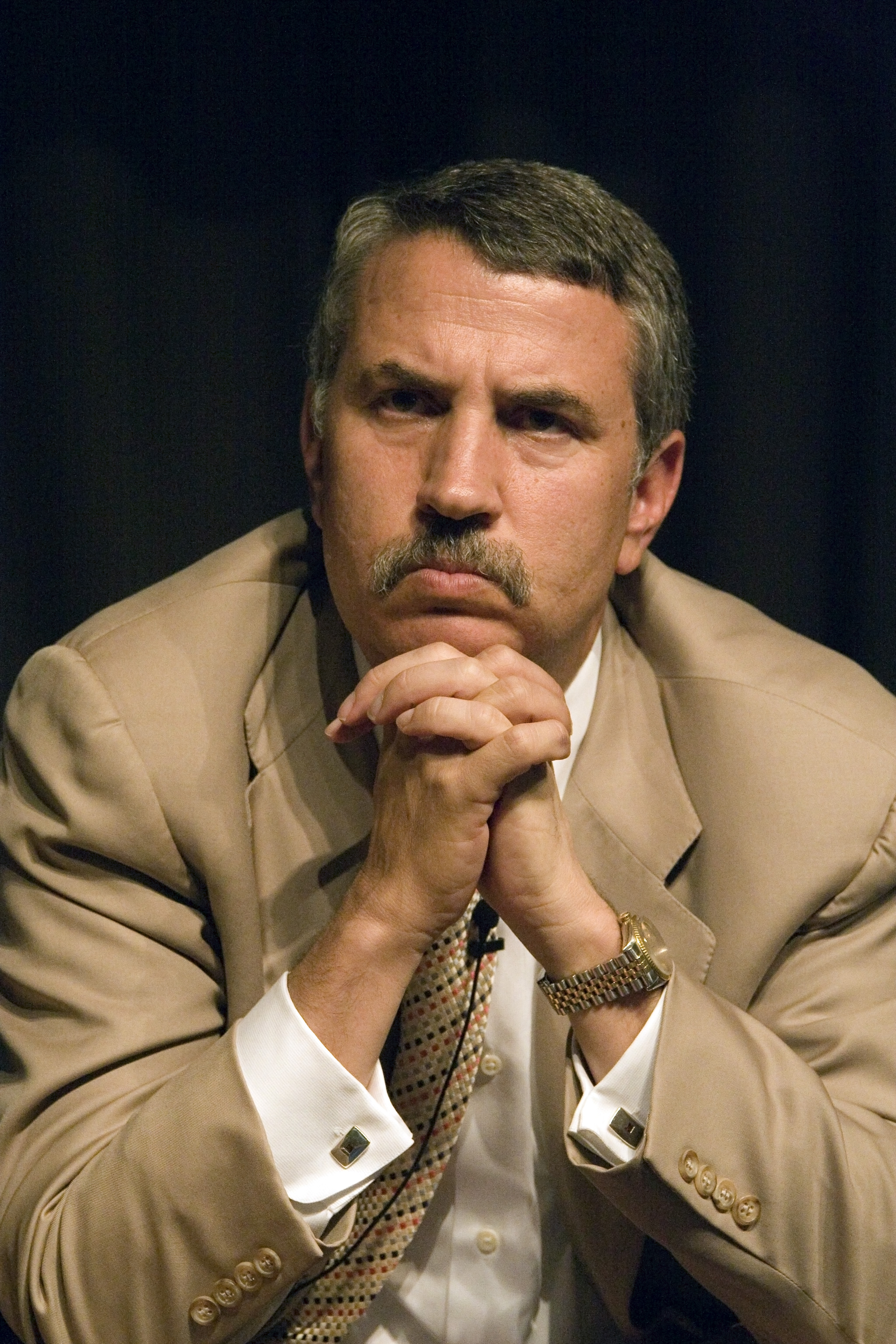
Sigh.  David Brooks and Tom Friedman.

I confess I cannot write extensively about either because I can no longer stand to read them.  Brooks is a highfalutin reformulator of the conventional wisdom, a perennial apologist for the powers that be.  (He’s supposed to be the thinking liberal’s conservative, but for my money the person who matches that description is Andrew Sullivan.)  As for Friedman, it’s hard to imagine another serious columnist so undeserving to be taken seriously.  He talks and talks and talks and talks.  He says almost nothing worth hearing.  He’s the Ross Douthat of “liberalism”, proving that, for the privileged, there’s apparently no greater privilege than watching the privileged enjoy their privileges.

But if I can’t rise to the occasion beyond ad hominem characterizations of professional hackery, I can at least leave it to someone who is very very good at it, and reads both closely enough to write extensive uproarious takedowns of their pretensions and considerable intellectual shortcomings — Matt Taibbi.

Taibbi holds Hunter S. Thompson‘s old position at Rolling Stone as chief political correspondent.   Like Thompson, he’s as profane as he is articulate, and openly contemptuous of those who abuse their power.  He’s also an old school journalist who does the legwork, gets the facts, and provides reportage that is not just cold-filtered polemic (take note, Maureen Dowd).  Taibbi is the only high-profile, mass-circulation journalist to take on Goldman Sachs.  Last year he produced a notorious article that had them running scared and included this often repeated formulation: “The world’s most powerful investment bank is a great vampire squid wrapped around the face of humanity, relentlessly jamming its blood funnel into anything that smells like money.” Here’s a little taste from a post (“Let Them Eat Work“) that encapsulates Taibbi’s estimation of David Brooks:

Would I rather clean army latrines with my tongue, or would I rather do what Brooks does for a living, working as a professional groveler and flatterer who three times a week has to come up with new ways to elucidate for his rich readers how cosmically just their lifestyles are? If sucking up to upper-crust yabos was my actual job and I had to do it to keep the electricity on in my house, then yes, I might look at that as work.

But it strikes me that David Brooks actually enjoys his chosen profession. In fact, he strikes me as the kind of person who even in his spare time would pay a Leona Helmsley lookalike a thousand dollars to take a shit on his back. And here he is saying that the reason the poor and the middle classes are struggling is because they don’t work hard enough. Is this guy the best, or what? Does it get any better than this?

Now, that’s speaking truth to power.  (More Taibbi on Brooks here and here.)
Continue reading

Saturday Night at the Movies: Phantom of the Opera

httpv://www.youtube.com/watch?v=FgiPXFVY0T8&feature=channel

The movie that haunted Frye as a child, The Phantom of the Opera. (The full movie appears at the link above.)

Frye in “Notebook 12”:

I have a feeling — probably it is just one of those would-be profound feelings that it’s comfortable to have — that I cannot really get at the centre of a problem unless something in it goes back to childhood impressions.  Thus my New Comedy ideas, the core of everything I did after Blake, go back to my [Horatio] Alger reading, and now I think the clue to this labyrinth is the sentimental romance of the 19th century, the roots of which are in Scott.  While I lived on Bathurst St. I was constantly reading ghost stories with similar patterns in mind, & Poe & Hawthorne have always been favorites.  Underground caves; the Phantom of the Opera & the like, are all part of the Urthona penseroso pattern.  (CW 9, 141-2)

Emily Dickinson

emily-dickinson

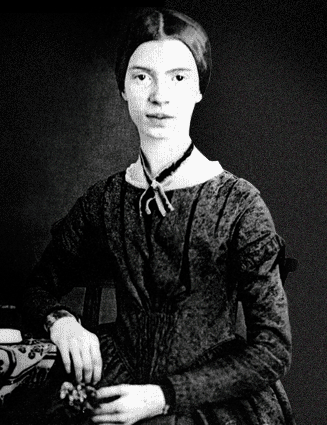
On this date Emily Dickinson died (1830 – 1886).

Frye in his essay “Emily Dickinson”:

Like Blake, with whom she has been compared ever since Higginson’s preface of the 1890 volume, Emily Dickinson shows us two contrary states of the human soul, a vision of innocence and a vision of “experience”, or ordinary life.  One is a vision of “Presence,” the other of “Place”; in one the primary fact of life is partnership, in the other it is parting.  Thus she may say, depending on the context, both “Were Departure Separation, there would be neither Nature nor Art, for there would be no World” and “Parting is all we know of heaven, / And all we need of hell.” (CW 17, 266)

An adaptation of “I Heard a Fly Buzz When I Died” after the jump.

Continue reading

TGIF: “George” — The Movie!

httpv://www.youtube.com/watch?v=_Crw85HvIFs

In a world where unforgettable moments of well-earned defeat and humiliation in an iconic sitcom can be stripped of their context and re-edited to transform one of the most hapless and selfish of characters into the redeemed hero of a tearjerking melodrama — in only such a world could that hero be. . .George Constanza.

This ingenious re-alignment of the Seinfeld universe brought to you by lorocker.

Sir Arthur Sullivan

Arthur_Sullivan

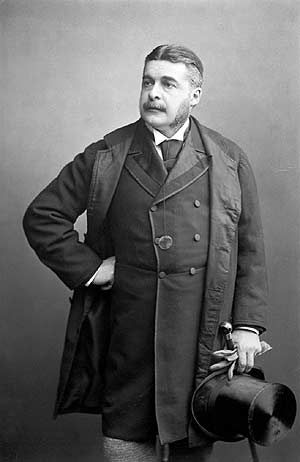
Today is Sir Arthur Sullivan‘s birthday (1842 – 1900).

Here is an excerpt from Frye’s student review for Acta Victoriana of the Music Club’s April 1933 production of Gilbert and Sullivan’s H.M.S. Pinafore.

But here, in the calm hush and cloister-quiet of Gate House, the artistic conscience of the Music Club rises to defend itself.  If there ever was a time when Pinafore could be well done, it argues, that time has long since passed.  Considered as a whole the farce is clumsy and ill-conceived, besides being unendurably hackneyed, and it simply cannot be sustained on its own momentum.  No human power can prevent that unspeakable finale from dragging painfully to a limping and inept close.  All the standard actors of the Music Club are good for lots of entertainment, says the conscience, but they could do nothing with their parts; they had to kick them off the stage and substitute themselves.  The cast of characters in Pinafore are all stuffed shirts and artificially bulged chemises, O critic, but those who took their places are wholesome happy youngsters who are all friends of yours, and you for one know that the fairy changelings are infinitely more attractive. (CW, 17. 233-4)

Frye’s doubts about the contemporary appeal of Gilbert and Sullivan notwithstanding, after the jump there’s a delightful version of “The Sun, Whose Rays Are All Ablaze” from Mike Leigh’s Topsy-Turvy, a wonderful film about the creation of The Mikado.  Yes, and okay, there’s a performance of “Three Little Maids From School” from the same film too.  (If you haven’t already seen this movie, put it on top of your list.)

Continue reading