Author Archives: Michael Happy

William Shakespeare

SANDERS2s

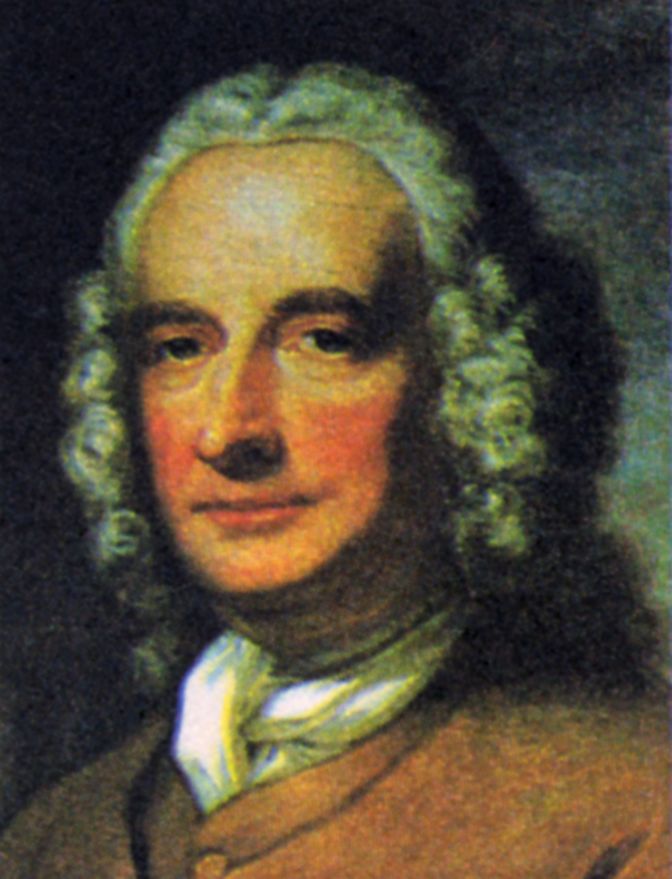
Today is traditionally regarded as Shakespeare‘s birthday (1564 -1616).

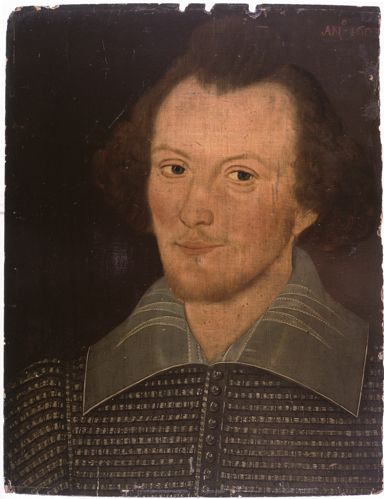
Frye didn’t live to see the discovery of the Sanders portrait, above, but did mischievously observe of the Droeshout engraving (by way of dismissing the significance of biography as any sort of key to interpretation) that it is the portrait of a man “who is clearly an idiot.”

Frye has so much to say about Shakespeare that just about any number of quotes would do here.  I was lucky enough to be among the last generation of students to take Frye’s undergraduate Shakespeare course, and I remember very well the thrill it gave me to hear him say things like this:

In every play Shakespeare wrote, the hero or central character is the theatre itself.  His characters are so vivid that we often think of them as detachable from the play, like real people.  So such questions as, “is Falstaff really a coward?” have been discussed since the eighteenth century.  But if we ask what Falstaff is, the answer is that he isn’t: he’s a character in a play, has no existence outside that play, and what is real about him is his function in the play.  He has a variety of such functions — vice, braggart parasite, jester — and one of the things he has to do is certainly to behave at times like a stage coward.  But Falstaff, like the actor who plays him, is only what he appears to be; and what he really really is, even if he could exist, wouldn’t exist. (On Shakespeare, 4)

A clip from Peter Brook‘s great film adaptation of King Lear after the jump.

Continue reading

Henry Fielding

fielding

Today is Henry Fielding‘s birthday (1707 – 1754).

Here’s Frye on Jonathan Wild in Notebook 36:

Jonathan Wild has suggested three main ideas.  First, Wild is an ironic pharmakos, treated explicitly as a counterpart to “greatness.”  What happens to him ought to happen to all “great” men: Wild is obviously criminal only because society is still too strong for him: he’s a hero, a Caesar or Alexander, in an ironic context.  Second, the book is satire & comic rather than tragic irony, because Fielding’s norms are unmistakable: passages that would represent a complete breakdown  of the ironic pretense (e.g. the description of Bagshot) if they appeared in, say, Flaubert, are in decorum here, where the tone is the militant counterpart of irony, the satiric descent of fantasy on a moral canto fermo.  Third, the Mrs. Heartfree episode, which is typical of romance when the central figure is female & instead of killing dragons she fends off fucks.  Cf. Spenser’s Florimell & Morris’s Birdalone.  One might call it a quest of the perilous cunt.  Very sharp counterpoint between the realism of JW [Jonathan Wild] & his whorish bride & this corny romanticism in which Mrs. H. gets through a dozen assaults unplumbed & returns “unsullied” to her husband.  A good deal is said about Providence: Providence & Fortune are the existential projections of comic & tragic forms respectively.  (CW, 23, 249)

Charlotte Bronte

charlottebronte

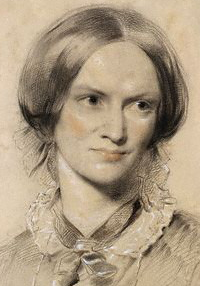
Today is Charlotte Bronte‘s birthday (1816 – 1855).

Frye in Notebook 44 on Shirley:

[182]  [Charlotte Brontë’s] Shirley: full of characters spouting ideologies, including naturally the author’s own.  Toryism, radicalism, rationalized laissez faire, the sexist ideology Charlotte Bronte knew so much about; economic miseries of Orders in Council; the understandable but mistaken tactics of the Luddites, all dated back to 1812 from the 1840’s to provide the hindsight of the Chartist parallels.  Other books studying these topics directly might have more & better organized information, but if written in ideological language, however detached or partisan, would have to treat all individuals as case histories.  What makes Shirley & other works of fiction irreplaceable is the assimilation of all this to the primary concerns of food (i.e. jobs), sexual love, work & play.

Continue reading

Northrop Frye Festival Begins Today! [Updated]

balloons

Congratulations to our friends and colleagues in Moncton!  We wish you the very best, and look forward to hearing from you.

We wish we were there!!

Update: Here’s a report from Ed Lemond on day 1:

The Official Launch of the Festival is this morning at 11am, with bells and whistles, musicians, sponsors and politicians, and our own Poet Flyé, Jesse Robichaud, whose task is to follow the festival for a week, make notes and come up a long poem to present at the closing next Sunday.  Since Jesse is also a reporter at the local newspaper, we’re assured of some good coverage.

There’s snow on the ground, so it must be Frye Festival time.  We always get at least one snowstorm during the festival, or at least a dusting.  In 2001 the plane carrying Robert Bly and Marie-Claire Blais had to be diverted to Halifax because of a major snowstorm.  They finally got here in the early morning hours, in time for their events.

We’re lucky that we haven’t lost any authors to the volcano.  Craig Stepenson, scheduled to give a talk Wed. evening (“Reading Frye Reading Jung”), fortunately decided to visit friends in Toronto before coming to Moncton.  He left Paris last Wed. or Thur., before flights were grounded.  I’ll meet him tomorrow and drive him to a local school, for a ‘school visit.’  It will be interesting to see how a Jungian Analyst based in Paris, France, addresses a class of high school students in Riverview, New Brunswick.

The main event today, after the Official Launch, is called Prelude: Emerging Writers of New Brunswick, featuring 6 young writers, 3 French, 3 English, each with one or two books to their credit, just beginning their careers.  8pm, we’ll be there.  Tomorrow things start to heat up.

Picture of the Day

ce8029544f12be628ebea2f58298

Sarah Palin at a fund-raiser in Hamilton, Ontario, April 15th.

I am posting this only at the special request of Californian Trevor Losh-Johnson, who will be joining the graduate program at McMaster in September and was curious to know how the Palin appearance played here.

Well, you can see by the photo that she’s turned writing on her hand into Christianist shtick.

If you want to know how the Hamilton Spectator covered the event, you can read its headline story here.

Here are the first four grafs:

Hamilton’s NHL ambitions have the support of Sarah Palin.

The former Alaska governor, in town last night for a fundraiser at Carmen’s Banquet Centre that raised $50,000 for a children’s charity, was at the Sheraton hotel in downtown Hamilton before the evening event.

“I’m overlooking Copps Coliseum and I thought, what a great place for an NHL franchise,” she told a sellout crowd of more than 900 people at the east Mountain banquet centre.

“You’re all set up for it,” she said to applause. “If I ever meet the president of the NHL, I’ll put a little bug in his ear,” Palin said.

That about capture it for you, Trevor?

To be fair, you can read Spec columnist Jeff Mahoney’s very funny “sneak peek” at her speech here — which perhaps confirms that satire may now be more relevant than what otherwise passes for news.

Bill Maher on the whole writing-on-the-hand thing after the jump.

Continue reading

Thomas Middleton

middleton

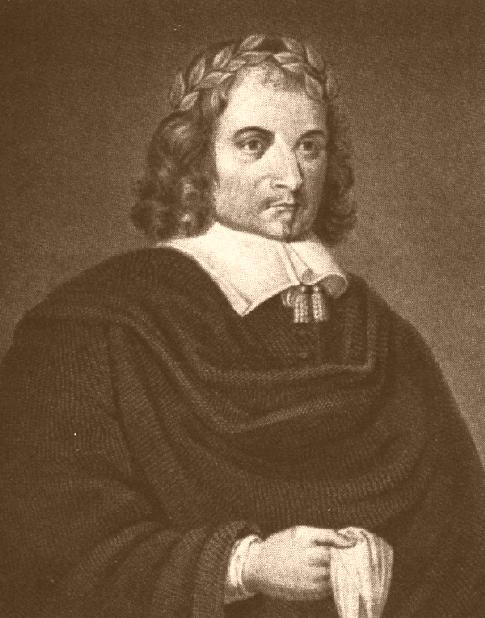
Today is playwright Thomas Middleton‘s birthday (1580 – 1627).  I once joked to a prof that if there’d been no Shakespeare, we’d be reading Middleton by default.  Not meaning to diss the birthday boy but, the impressive output notwithstanding, we got the better end of the deal.

Frye in Notebook 9:

One, or two, reasons why this is not an age of great tragedy are improved methods of contraception and of police investigation.  In The Changeling two people are arrested for murder on the ground that they left town the day after the murder took place: one needs ghosts of victims & confessions by the guilty to improve the quality of detection.  (CW 20, 256-7)

Trailer for a current English production of The Changeling after the jump.

Continue reading

Quote of the Day [Updated]

Masaccio-Adam-and-Eve-Expelled-from-Paradise-1427

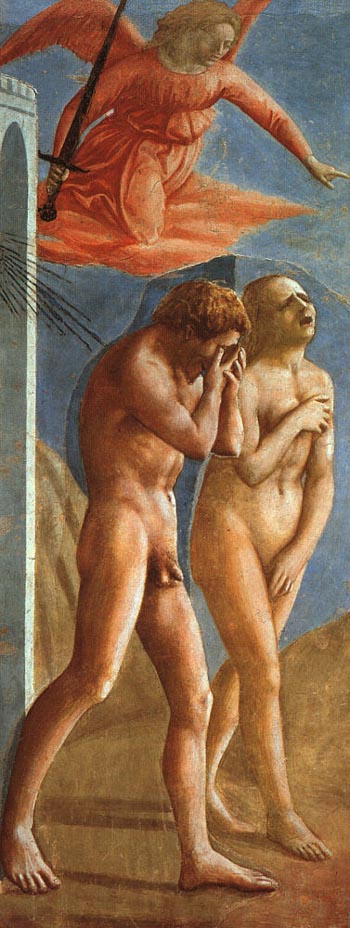
Masaccio, Adam and Eve Expelled from Paradise, 1427

Creation, sex, shame, and sin in Milton’s Paradise Lost:

In refusing to recognize the Son as their own creative principle, then, the devils are closing the gate of their own origin.  This theme of closing the gate of origin recurs all through the epic, and is the basis of the feeling which later appears in humanity as what Milton calls shame.  Shame to Milton is something deeper and more sinister in human emotion than simply the instinctive desire to cover the genital organs.  It is rather a state of mind which is the fall itself: it might be described as the emotional response to the state of pride.

Frye, The Return of Eden (University of Toronto, 37)

Update: Andrew Sullivan has been running a discussion on Christ and sexuality at his blog; you can pick up the thread here.

John Ford

pity2

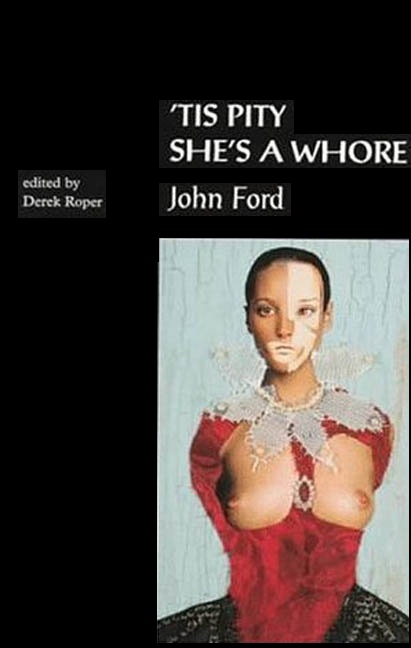
On this date playwright John Ford (1586 – 1640) was baptized.

In Notebook 9 Frye makes some telling comparisons between Shakespeare and the Jacobean playwrights, particularly Ford, Webster, Tourneur, and Dekker.

As compared with his contemporaries, Shakespeare’s sense of tragedy is much more firmly rooted in history, and he lacks the moralizing tendency that makes Tourneur call his characters by such names as Lussurioso & Ambitioso.  Hence he does illustrate my point about tragedy being closer to a reality-principle than comedy.  Outside him, I’m not sure that that’s true: there’s just as much fantasy & manipulation in Tourneur or Ford as there is in Shakespearean romance.  Shakespeare’s tragic vision also has something to do with his adherence to popular theatre: he has a public sense of dramatic action, not a ruminative psychologizing one…

In Ford’s TPSW [‘Tis Pity She’s a Whore] an amiable & harmless old woman who has connived at the heroine’s incest first of all has her eyes put out, & then, as an applauded act of justice, is led out to be burned at the stake.  That really is brutality.  And Hamlet’s excuse about Claudius’ murder until he’s sure to go to hell is nothing compared to what the viallains in Tourneur & Webster do.  We expect a very high standard of sensitivity from Shakespeare, even the senstivity of readers who on the whole don’t live in tragic worlds.  We understand, but don’t realize, Dekker’s remark: “There is a hell named in our creed, and a heaven, and the hell comes before; if we look not into the first, we shall never live in the last.”  Several tragic dramatists, especially Webster, pick up M’s [Marlowe’s] remark in Faustus…

A manipulated tragic situation is often one where providence or Heaven or some power overreaching Nature takes a hand in the action, & functions as the eiron.  Many dramatists put up “Danger: God at Work” signs: there’s a good example in Ford’s TPSW [‘Tis Pity She’s a Whore].  (CW 20, 256-7)

A trailer for a recent San Fransisco production of ‘Tis Pity She’s a Whore after the jump.

Continue reading