Author Archives: Michael Happy

“The Great Charlie”

httpv://www.youtube.com/watch?v=6tcZhrrSyzs

The delightful dancing dinner rolls scene from The Gold Rush (1925).

Frye published his article on Charlie Chaplin, “The Great Charlie,” in The Canadian Forum 21 (August 1941), when he was 29. It’s no surprise that the insight is not only keen but prescient. Frye, unlike most cultural critics, does not date.

He opens with the observation: “When the culture of the industrial age really hits its stride, the mainsprings of its creative power will be in its one culture industry,” the movies (Northrop Frye on Modern Culture, 98).  Even so, writing more than a decade after the “Age of Tinsel” which ended with the introduction of sound, Frye notes that the movies suffer from a sort of “decadence” that puts “the emphasis on the means, on beautiful actors and showy sets.” He nevertheless sees a great future for the art form because “the movie is capable of the greatest concentration of any form in human history”:

The possibilities of combining photographic, musical, and dramatic rhythms leave all preceding arts behind . . . . Music accompanying silent business can turn it into a scene de ballet: a camera travelling around a dialogue can give a weird fourth-dimensional symbolism: the crudest slapstick can use a repeating pattern of scene or gesture as essential to it as blood and sleeplessness to Macbeth or the Siegfried motif to The Ring. When a real genius controls the the production of a movie, things should happen. (99)

The first genius of commercial movie making, says Frye, is Chaplin, who, at a time when “the average commercial film had the artistic appeal of a streetcar ad,” was  “turning out grotesque little ballets, with every movement and gesture as eloquent as the lines of a sculptor’s drawing” (99).

Chaplin, in fact, is representative of a stream of “major American art” that “seems always to have been the product of an individualism which has no constructive theory of society and regards it as essentially a product of hypocrisy, tyranny, and cowardice. Its motto is Whitman’s ‘Resist much; obey little.’ Never mind why: just buck.”  Frye then includes a thumbnail characterization of American culture which, if he doesn’t already know about it, should thrill Joe Adamson:

This idea of the original sin of the state, this reckless and instinctive anarchism, is in Jefferson’s theory of decentralized democracy, in Thoreau’s program of civil disobedience, in Emerson’s idea of self-reliance as trust in God, in Whitman’s myselfishness, in Hawthorne’s and Melville’s pagan and diabolic allegories, in Mark Twain’s intellectual nihilism. (100)

I’ve already posted a complete version of City Lights, and Frye says of it that “just before the Age of Tinsel dropped dead, Chaplin planted a terrific kick in its posterior” with this remarkable little film “in which the rags-to-riches philosophy of that period, its fawning on athletes and tycoons and its callous disregard of subtler heroes, got its definitive takeoff.”  Given how much this sounds like our own turn of the century gilded age, it’s no wonder the film remains so powerful.  In fact,  “the hero of the Chaplin film, with his quixotic gallantry and courtesy, his pity for the weak, his apologetic and ridiculous isolation from society, and the amount of damage he does against his own very good will to that society,” makes the “Yankee cussedness” he represents “an ideal worthy of respect” (100).

Over the next couple of Saturday nights I’ll post the movies that Frye spends the rest of article examining, along with his observations about them: The Great Dictator (then just released) and Modern Times, the last of Chaplin’s “little Tramp” films.
“Our chief whipping boys will be Harold Bloom and Northrop Frye”

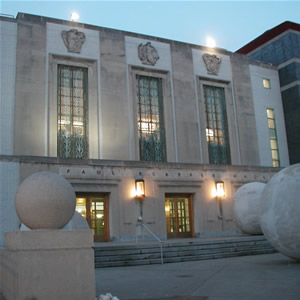
Klapper Hall, home of the English Department, Queens College, CUNY

Klapper Hall, home of the English Department, Queens College, CUNY

Here is an excerpt from an online description of a course on Biblical Narrative taught at Queens College, CUNY.  Joe and I saw it a couple of years ago but then lost track of who was responsible for it.  Jonathan Allan recently came across it and sent it to us:

This course will introduce Biblical narrative, its special characteristics, and some of the various theoretical methods that have been recently used to interpret it, primarily from the two main camps of contemporary narrative theory, the structuralist/semiotic school descended from Gérard Genette and the rhetorical-formalist school descended from the late Wayne C. Booth.  But we will also be looking into feminist, queer, Marxist, psychoanalytic, and postcolonial readings.  Our principle narrative texts will be those in Genesis, Exodus, Judges, Ruth, Samuel, Jonah, Mark, and Luke.  The literary critics and narrative theorists whose ideas we will be trying out will start with Erich Auerbach, and include, among others, Frank Kermode, Roland Barthes, Mieke Bal, Phyllis Trible, Terry Eagleton, Meir Sternberg, Robert Alter, Stephen Moore, Avivah Zornberg, Robert Kawashima, and Emmanuel Levinas; our chief whipping boys will be Harold Bloom and Northrop Frye.

The Critic as Artist

wilde

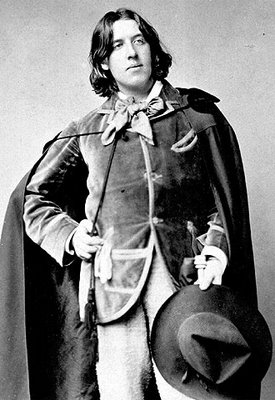
One of Frye’s favorite critics, Oscar Wilde, observed, “All bad art is the result of good intentions.”

I think Frye makes it clear enough that all bad criticism arises from the same impulse.  Literature, for example, does not possess intention in any ideological sense, despite the fact that most “literary” critics have more or less assumed that it does.  What literature possesses is concern, which is not intentional but prophetic.  The fatalism of ideological criticism is its failure.

That is all.

Interpenetration

bohm

I continue to read Bob Denham’s book, Northrop Frye: Religious Visionary and am very much in the mood to blog on it as I go.

Bob early on makes a case for Frye’s later use of the Buddhist term “interpenetration“, while citing the modern scientific adaptation of it by Alfred Whitehead, David Bohm, Karl Pribram, and Geoffrey Chew, among others:

The idea that two things are the same thing (as in metaphor) is for Frye better captured by the word “interpenetration” than by the word “identity”; for interpenetration, whether unity or variety, wholes or parts, totality and particularity, self and other, human and divine, suggests more strongly than does identity that each half of the dialectic retains its own distinctiveness while each is also present in the other.  This idea of preservation is contained within the process of the Hegelian Aufhebung. Unity, as Frye is fond of insisting, does not mean uniformity.  Moreover, interpenetration is a more dynamic concept than identity, the former implying a free flow back and forth between, in Coleridge’s phrase, the “two forces of one power.” Each of the philosophical speculations on interpenetration suggests that once we get beyond the assumptions of Cartesian coordinates and Aristotelian causality, the idea that “everything is everywhere at once” is not so inexplicable a paradox as it initially might seem. (45)

Bob seems to be alluding to the often repeated complaint that Frye’s criticism is static, a catalogue of normative “universal forms.”  It hardly seems to matter to those who regard it this way that Frye always insisted that his analogy of structure from architecture is only one half of the metaphor: that form in literature implies movement, and movement process, and that the archetypal critic of his Anatomy period must keep both of these considerations in mind.

I am one of those who continue to use the default Anatomy-era term “identity” when discussing Frye’s notion of metaphor.  As Bob makes clear, however, the term may have been adequate when it first emerged in Frye’s published writing, but, once misread by those most inclined to misread it, Frye later substituted the more dynamic metaphor to express what he wants to say about the dialectical nature of metaphor as an ongoing process of identity.  As Bob also makes clear, “interpenetration” turns up early in Frye’s notebooks decades before it appears in his writing.  That perhaps is the most remarkable thing about the notebooks: they are a repository of prophetic knowledge where Frye works out notions that he may not bring into play in his published work until they are required, sometimes many years later.

Saturday Night at the Movies: “City Lights”

httpv://www.youtube.com/watch?v=NiUCW8EVMy8

I recently watched a perennial favorite, Chaplin’s City Lights, arguably one of the greatest silent films ever made, and perhaps Chaplin’s best.  Sometime very soon I’m going to blog on Frye’s essay “The Great Charlie” (and maybe his views on movies in general).  In the meantime, the equally poignant and funny opening scenes of City Lights are featured above. If you haven’t seen this movie, then you must.  The rest of it appears after the jump.

Continue reading

Spam Alert

spam02

It’s understandably quiet this week.  Joe and I are in the middle of exams, as are many of you.  So this is a good time to tell you about our spam situation.

Because we maintain a live email link to the blog, we receive a regular stream of spam to our comments box — 160 and counting.  For example, the post “Frye and Music” has attracted a fair amount of spam, including at least one solicitation from a piano mover.

Yesterday we received our first ever pornographic spam.  It was from a website called Naked Combats, and the teaser was, “Watch two wrestlers fight balls to the wall and then fuck…”

Which of our posts drew the attention of the Naked Combats web trawler? “The Bondage of History“. 

I’m guessing the keyword was not “history.”

Say goodnight, Gracie.

Katabasis and Popular Culture

httpv://www.youtube.com/watch?v=sa3bHKWZoJg

The movie that haunted Frye as a child: Lon Chaney in The Phantom of the Opera, 1925.

I am reading Bob Denham’s wonderful book, Northrop Frye: Religious Visionary and Architect of the Spiritual World.  It is divided into two main parts, “Exoterica” and “Esoterica”, the first of which I am making my leisurely way through. I have always called myself an exoteric Frye scholar, which means that I try to approach him as a general reader would through the published work and with the assured assumption that it possesses total coherence.  This approach has never failed me.  But what Bob manages to demonstrate is how the esoteric element of Frye’s critical vision illuminates the exoteric: and, appropriately enough, illuminates it from within.  I’m not even bothering to annotate or highlight the book — that can come with subsequent readings.  This first time round I simply enjoy being startled by the clarity of Bob’s insights while tucking away little bits of miscellaneous information here and there, like a chipmunk filling its cheeks.

Here are a couple of observations that stand out for me at this point, and I hope are at least tangentially related to the posts that have been going up the last few days.

The first has to do with Frye’s notebooks, which Bob characterizes as the “imaginative free play” where Frye’s mind displays its tendency to dianoia or the gestalt perception of pattern rather than the narrative continuity of mythos.  Here Frye is associative, oracular, synchronicitous.  Bob mines a number of excellent quotes from the notebooks to illustrate the tendency, but this one stands out:

[I]n beginning to plan a major work like the third book, don’t eliminate anything. Never assume that some area of your speculation can’t be included & has to be left over for another book. Things may get eliminated in the very last stage . . . but never, never exclude anything when thinking about the book. It was strenuous having to cut down FS [Fearful Symmetry] from an encyclopedia, but . . . major works are encyclopedic & anatomic: everything I know must go into them — eye of bat & tongue of dog. (25)

The second observation relates to the emphasis on katabasis or descent in Frye’s later work, which Bob astutely notes “appears to be even more important” than the theme of ascent.  Once again, he comes up with a superb quote from one of Frye’s 1960s notebooks to make the point:

Everybody has a fixation.  Mine has to do with meander-and-descent patterns. For years in my childhood I wanted to dig a cave & be the head of a society in it — this was before I read Tom Sawyer. All the things in literature that haunt me most have to do with katabasis. The movie that hit me hardest as a child was the Lon Chaney Phantom of the Opera. My main points of reference in literature are such things as The Tempest, P.R. [Paradise Regained], [Blake’s Milton], the Ancient Mariner, Alice in Wonderland, the Waste Land– every damn one a meander-&-katabasis work. (29)

Continue reading

Alice

httpv://www.youtube.com/watch?v=TQuqeLBTetA

Joe’s post the other day featured a still from Walt Disney’s Alice in Wonderland, and it reminded me of the remix of music from the film by a precocious 20 year old electronic musician from Australia who goes by the name of Pogo.  The video above has been viewed more than 4 million times on YouTube, and — besides offering trippy relief during the most hectic time of the semester — captures very nicely the uncanny experience of the theme of descent.

Another less relevant but perhaps more remarkable reimagining of an iconic Disney movie after the jump. Continue reading

We Are Here!

horton

I want to assure everyone that we’re still here.  Joe Adamson and I of course are both working our way through the end-of-semester trials of grading and exams, so that’s kept us pretty much pre-occupied.  Moreover, the gods have determined that this is an especially good time for my home computer to crash.  (It’s still not clear whether or not I’ve lost everything on it.)  I am buying another today and hope to be up and more or less fully functioning very shortly.

Tina Weymouth

httpv://www.youtube.com/watch?v=HN1t5qdBUzs

Tom Tom Club, “Genius of Love” (single rather than extended club mix)

Today is Tina Weymouth‘s birthday (born 1950).  Tina is known primarily as the bassist for Talking Heads from the time of its inception in the early 70s until its slow demise in the early 90s.  But with her side project, The Tom Tom Club, she had a monster hit in 1981 with “Genius of Love.”  This was the early days both of video and of rap as an emerging mainstream genre.  The video remains charming (like most videos associated with anyone from Talking Heads, it is quite precocious), and the song, as unlikely as that may seem, was one the most sampled tracks by rap artists throughout the 80s and 90s.  It still occasionally re-emerges from time to time.

A real treat for Talking Heads fans after the jump.

Continue reading