1942:
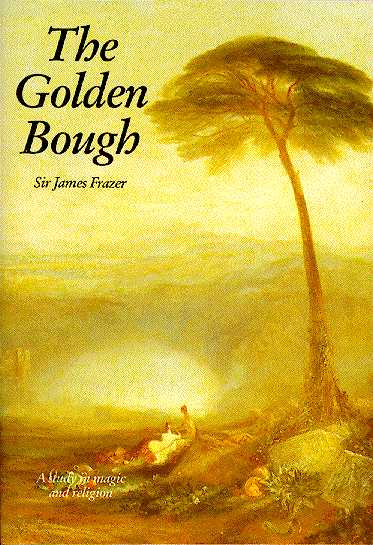
[138] Reading the Golden Bough again and Blake & Spenser chase each other’s tails all through it. My graduate Spenser course is waving gently in the breeze….
1942:
[138] Reading the Golden Bough again and Blake & Spenser chase each other’s tails all through it. My graduate Spenser course is waving gently in the breeze….

Our technical problems have been resolved. All our links –including our Comments links — are now functioning again. Be sure therefore to check out all of Bob Denham’s post earlier today on Archetype.
Our McMaster Library server seems once again to be struggling a bit today, so we apologize for any inconvenience. The posts are fine except the ones that are split by the “read the rest of this entry” caption.
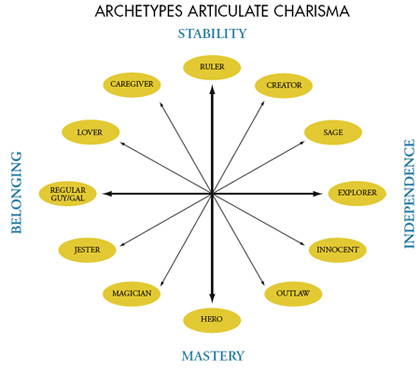
Reading Bob’s post on archetype reminds me how readily I have over the years slipped into referring to just about every verbal phenomenon in Frye as an “archeype” of some sort. I have done so on the principle –which (as Bob also notes) Frye himself acknowledges — that he is an “archetypal critic” in the sense that archetype refers to a recurring pattern of signfication. This seems consisent with Frye’s critical nomenclature generally: the dialectic at work in all of his criticism means that certain terms seem inevitably to expand their reference. For scholars of my generation, for example, the key terms to understanding Frye seem invariably to be “myth,” “metaphor,” and “archetype.” Without an expansive understanding of those words (but also with a very specific understanding that they possess immanent and not transcendental reference), we’d hardly know where to begin at all.
1942:
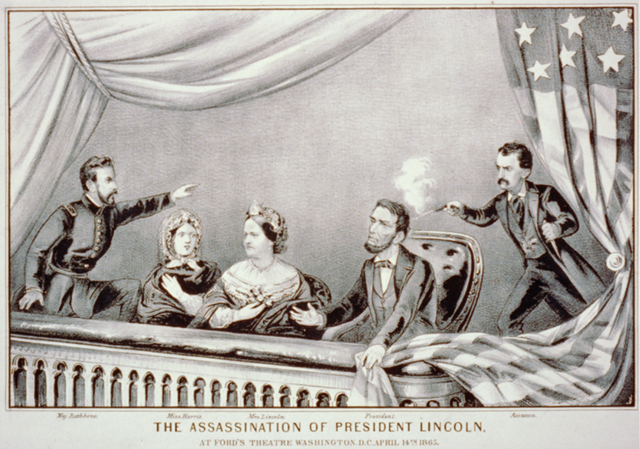
[135] Another S.C.R. [Senior Common Room] one: “they always assassinate the wrong man.”
Answering Russell’s response to my earlier post:
I guess it’s about getting the emphasis right, Russell. To say, as Frye does, that literature is “primarily” centripetal is not to say that it is exclusively centripetal. Frye himself regularly makes the point Greenblatt does in Hamlet in Purgatory: that an understanding of the external “referents” in any given work of literature can only deepen our appreciation of it. However, that’s about where agreement between them ends. Frye’s reading scenario is usually laid out something like this: as readers we are confronted with a work of literature with lots of hard words to be looked up and unfamiliar allusions to be traced back to their source, not to mention a contemporary intellectual milieu to be absorbed. And, of course, it’s a good thing we make the necessary effort to do that; it is certainly an integral part of literary scholarship, as Frye invariably points out. But once we have done all of that, we are still confronted with a work of literature that must be interpreted as such because, as Frye says in The Educated Imagination, literature does not reflect reality, it swallows it. And, as he says in Anatomy, once an ideology is taken into a work of literature, it is no longer ideological in reference, it is literary.
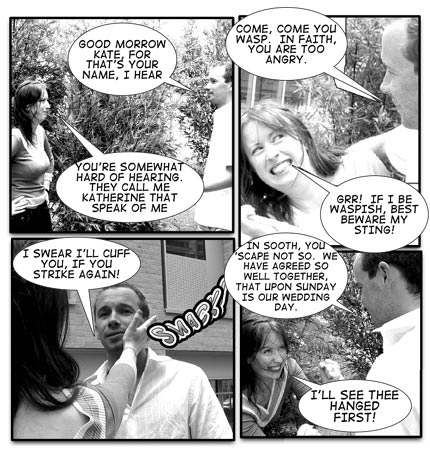
Both of the Shakespeare plays you cite, Hamlet and The Taming of the Shrew, provide excellent opportunities to demonstrate how this works. While it is true, for example, that our appreciation of the afterlife misery of Hamlet’s father’s ghost is enhanced by an understanding of the theological conceptions of the afterlife at the time, it’s pretty clear that no audience of Hamlet requires anything approaching a scholarly knowledge of such a thing. The archetype of the dread surrounding death is more than sufficient to communicate to us what is happening at the elemental level of understanding. Death is terrifying, the afterlife a nausea-inducing mystery. “To be or not to be…” Nuff said.
The same goes with The Taming of the Shrew. We don’t, as you say, have to live in a “ideal world” to see that the normative misogyny of the world of the play is ugly and absurd. The play itself shows us that! One of the things that makes Taming of the Shrew remarkable — and, of course, entirely consistent with the canon as a whole — is its pronounced metaliterary perspective. In this case, it mostly takes the form (like A Midsummer Night’s Dream) of a dramatically superfluous fifth act. That is to say, the standard New Comedy plot is long since resolved by the time of the wedding banquet where Katherine gives her notorious speech in which she entreats the women present to submit themselves to their husbands, even to the point of exhorting them to “place your hands beneath your husband’s foot.” But this little pantomime is no more than that: it’s a fully self-aware show that Petruchio and Katherine are putting on for the benefit (or is it at the expense?) of their less imaginitively adept peers. We in the audience proper know better. We know that by this point Katherine and Petruchio have successfully (albeit with a tremendous amount of rough and tumble) negotiated together a world of play where nothing is quite what it seems — where the sun may be the moon or vice versa, and an old man encountered on the road to Padua may be mistaken for a “young budding virgin” — or, more accurately (and much more interestingly) be pretended to be mistaken for one. Do I also have to mention the Christopher Sly framing device that gives the play an absolutely explicit metaliterary dimension? The ironies of the fifth act are so rich and evocative that any attempt to reduce them to a flatly declarative ideological intent, however good those intentions, is demonstrably contrary to the inner workings of the play itself.
Here’s my point. I know that many can and do dispute such a reading of the play. However, it is also undeniable that this reading is at least possible with reference to what goes on within the play and without reference to any ideological anxiety beyond it. We are, of course, not compelled to see the play in these terms; but we are free to do so on very good authority (that is, the centripetal focus of the play as such), and that is always Frye’s point. All of our limits, when it comes to literature, are self-imposed. As Merv Nicholson might say, “what makes Frye different” is the articulation of the possibility that we might voluntarily recognize those self-imposed limitations and stroll happily and unencumbered right past them.

Russell Perkin expresses some concern that literature has limits. As he put it in a comment yesterday:
the nagging point that [Deanne] Bogdan raises for me is that, to quote her again “the hypothetical dimension of literature notwithstanding, literature does say things.” It doesn’t entirely leave behind what Frye calls “the original reference,” though of course it cannot be reduced to that either.
It’s at this point we really need to remind ourselves that Frye consistently observes that literary structures are primarily centripetal in reference. This is very easily demonstrated: you don’t need to believe in ghosts to appreciate Hamlet, you don’t have to be Catholic to access The Divine Comedy. Heck, you hardly require the English language to experience Lewis Carroll’s Jabberwocky.
That primarily centripetal direction of literary meaning carries it beyond mere metonymic reference with its undeniable “limits” to the liberating power of archetypal metaphor (pace Clayton Chrusch), whose patterns include not just the four mythoi of Anatomy but the four primary concerns of Words with Power. That is, the ethos of literary criticism is ulitmately (anagogically, kerygmatically) meta-literary: revealing the source of literature’s autonomy and authority, which express the imaginative constants of literary narrative driven by the existential constants of primary concern. This is not to say that the secondary concerns of ideology are irrelevant, but, in Frye’s “verbal universe” they are secondary, they are subordinated. The inability of any critical theory to appreciate the distinction between metaphor and metonymy or primary and secondary concern suggests why so much of what now passes for literary criticism has the character of wrestling a greased pig. It’s a losing proposition; there’s nothing to hold onto securely, except the anxiety of the fact that the struggle must continue and cannot be won.
1942:
[134] Met Kay Mabee at Feinsod’s: Children’s Aid on Isabella. Just through with taking five kids to court, packed in rumble seat, to charge parents with neglect & take custody. She noticed they seemed to be playing some sort of game, & she discovered it was seeing who could amass the biggest collection of fleas. Tonight Helen staying down & I strolled over to Yonge for dinner, found Murray’s jammed, drifted down to Bloor, picked up Roy [Kemp] & had dinner at Babloor. Full of his draft, of course. So I’m depressed, irritated, nostalgic & half-sick, & I suspect that tooth, which bothered me last year at exactly this time, is acting up again. The Forum sent up a ragtag staff too & that adds to the depression. Oh God, I’m bored with the war: I can’t even rise to a nobler expression.
A couple of responses to Joe’s earlier post:
Russell Perkin:
Joe, I find very little to disagree with in what you have written here. (And I especially share your enthusiasm for Mill. I teach On Liberty whenever I get the opportunity). Ultimately I think it comes down to a question of temperament: didn’t Frye somewhere describe himself as an Odyssey-critic, inclined towards romance and comedy as opposed to tragedy? I must be too inclined to pessimism!
I agree with you about not subordinating works to ideological criticism. The work, the author, not the student, and not the teacher, should be the voice that is heard in the classroom. But the nagging point that Bogdan raises for me is that, to quote her again “the hypothetical dimension of literature notwithstanding, literature does say things.” It doesn’t entirely leave behind what Frye calls “the original reference,” though of course it cannot be reduced to that either.
Adam Bradley:
Joe has hit on what I believe is the real problem with critical theory; that the logical end point of ideological criticism is a disdain for literature. How can it not be so? Identifying power structures a la Foucault or searching for Marxist class inequalities inevitably leads to an identification of the problems inherent in a text. Apply this model enough times to a text from enough ideological views and what is left? This to me is the number one argument against this type of inductive criticism. If I begin with an ideology and then use the tenets of that philosophy as a lens through which to see a text, then not only will I inevitably see whatever I’m looking for but it will also eventually become the reality of that text. If this is misogyny or anti-semitism or some other disdainful ethos, then it becomes a necessary action to dismiss that text as being “only” of that ethos. I have always wondered if this is a conscious act or simply a necessary outcome of such an approach. Regardless of the answer to that question or whether critics admit to this practice, the necessary result is that the text ends up becoming a secondary object to the soapbox that the critic puts himself on, yelling to the crowd about how terrible that text is. It reminds me of how the religious right creates demons out of everything to further the cause. By identifying everyone else as being evil then they can laud their own practices as being holy. I believe that critical theory began with good intentions but has ended up being the right wing faction of literary criticism, the bullying older brother that finds whatever he is looking for and shouts about it.
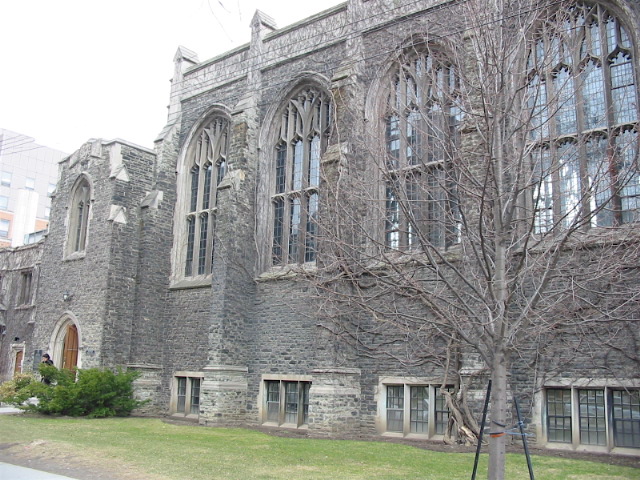
Burwash Hall, Victoria College: Senior Common Room at left
1942:
[132] Add to S.C.R. [Senior Common Room] catchwords (Sept. 14): “I don’t see why unconventional people aren’t willing to take the consequences of being unconventional.”
[133] At that party of Marion Darte’s Eleanor [Godfrey], stewed, said she didn’t like divorced people: Ray [Godfrey] said: “Say you don’t like the system of divorce, not that you don’t like divorced people.” I was very impressed with that for several days but not anymore. To dislike divorce is a vague approximation: to dislike divorced people is concrete as far as it goes. I don’t trust approximate remarks. Thus you say: “throw out all the old men & put in young ones,” meaning “throw out incompetents & put in good men,” but as the former looks vaguely like a more practical suggestion you hope it will approximate the latter.