Author Archives: Michael Happy

“It’s Algonquin for ‘the good land'”

httpv://www.youtube.com/watch?v=GtqesudKxSA

On this date in 1948, Alice Cooper was born.  Above is his classic meeting with Wayne and Garth in Wayne’s World.

For middle aged men like me who still remember defiantly adopting “I’m Eighteen” as an anthem at the age of 14, there’s a vintage 1971 live performance for you after the jump.

Continue reading

Frye Alert

alert

Starting today, we’re trawling the Web daily for anything Frye related.

Here’s a find: Graham Good has posted an essay under the title “Northrop Frye and Liberal Humanism” (PDF file).  I haven’t read it right through, although I did chuckle to see that Sir Frank Kermode makes his predictable contribution dismissing Frye in the second paragraph.

Good is also the author of Humanism Betrayed: Theology, Culture and Ideology in the Contemporary University published by McGill-Queen’s University Press.  The overview of the book reads in part:

In Humanism Betrayed Graham Good offers a defence of liberal humanism against the illiberal trends, political and intellectual, that dominate today’s university. He uses the McEwen Report episode at the University of British Columbia to illustrate the current political climate in universities, showing how due process was neglected in favour of ideological inquisition.

His chapter on Frye can be seen here, beginning on page 89.

“Primary Concerns Must Become Primary, Or Else”

gaia

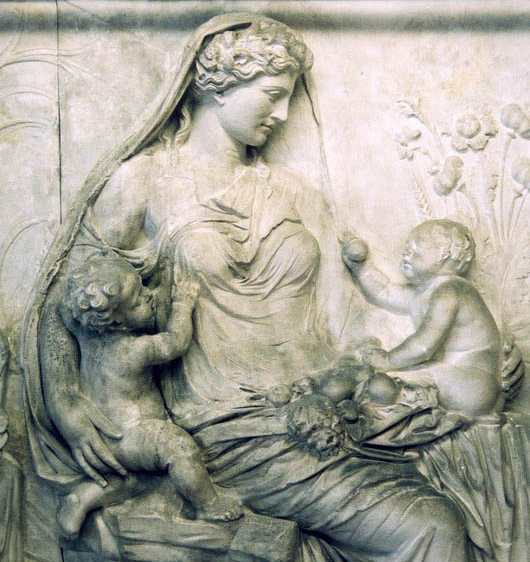
Gaia, Goddess of the Earth, Mother of the Gods

Thanks to extensively funded and aggressively concentrated efforts on the political right, there is still a high degree of global warming denialism going on out there.  In fact, recent polls in the U.S. indicate that the sudden sharp rise in denial is almost exclusively on the right side of the spectrum, which confirms that for such people the issue is not scientific but political.  It’s a familiar enough phenomenon, and it’s the M.O. most conspicuously of Fox News: if the “libruls” are for it, then it is hippy-dippy bullshit that must be shouted down.

The best case scenario (at least for those who understand that science is not a political brickbat to advance the interests of Exxon Mobil) is that we have very little time — measurable in just a handful of years — to reverse trends before the ecosystem tips and the warming process becomes fatally self-sustaining.  The only “debate” here is generated  by the sophistry of shills for the fossil fuel industry who between them cannot produce one piece of scholarship that passes peer review.  This is worth emphasizing: for all of the “debate” as it is characterized by a feckless and complacent mainstream news media (as it may be fairly characterized in the U.S.), there is not one piece of peer reviewed scholarship that denies the fact of anthropogenic climate change.

Again, that’s the best case scenario.

The worst case scenario is provided by James Lovelock, author of the Gaia hypothesis.  An outline of his doomsday vision can be found here.  Here’s a brief sample:

This article is the most difficult I have written. . . . My Gaia theory sees the Earth behaving as if it were alive, and clearly anything alive can enjoy good health, or suffer disease. Gaia has made me a planetary physician and I take my profession seriously, and now I, too, have to bring bad news.

The climate centres around the world, which are the equivalent of the pathology lab of a hospital, have reported the Earth’s physical condition, and the climate specialists see it as seriously ill, and soon to pass into a morbid fever that may last as long as 100,000 years. I have to tell you, as members of the Earth’s family and an intimate part of it, that you and especially civilisation are in grave danger.

Our planet has kept itself healthy and fit for life, just like an animal does, for most of the more than three billion years of its existence. It was ill luck that we started polluting at a time when the sun is too hot for comfort. We have given Gaia a fever and soon her condition will worsen to a state like a coma. She has been there before and recovered, but it took more than 100,000 years. We are responsible and will suffer the consequences: as the century progresses, the temperature will rise 8 degrees centigrade in temperate regions and 5 degrees in the tropics.

By Lovelock’s estimation, billions may be dead by the end of this century.  But even if he is wrong, the best case scenario confirms what ought to be our worst fears.  We are all Romanovs now.  Everyone is culpable and everyone is vulnerable.

As anyone who knows Frye’s Words with Power is aware, one of the primary concerns Frye identifies is sex and love, and the prophetic manifestation of that concern in literature is represented by the Garden where the generative power of nature and the recreative power of the human imagination are identified.  Its social vision is pastoral rather than competitive, and it is evocative of the Christian apocalyptic vision of the Book of Revelation in which nature in its present state falls away to reveal a city-garden at the end of time where God and humanity are one.  The point of course is that this is not an “event” that will “occur in the future.”  The apocalypse, according to Frye (following Blake), is potential in every moment in every one of us.  As that nice Jewish rabbi Yeshua once observed, “the kingdom of heaven is within you.”  In our current fallen state, our power to act in the name of love is the first power we deny, and our loveless rape of an “objective” nature from which we somehow consider ourselves distinct and independent is a delusion that will soon overtake us if we cannot push aside the veil of denial and see where we really are.

As Frye rather ominously put it, “primary concerns must become primary, or else.”

This is not a “partisan” issue — except insofar as partisans make it one with greed, cowardice, and lies.  Canada’s failure to live up to its legally binding commitments to the Kyoto Protocol, for example, falls into that category.

“Mariposa! Mariposa!”

sunshine

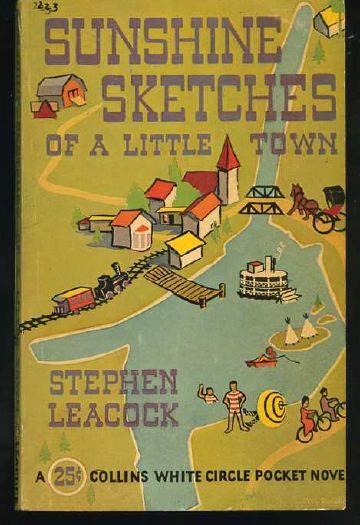
Further to Bob’s post citing Frye on the interchangeability of the Liberals and the Conservatives before the advent of the C.C.F.  From Stephen Leacock‘s “The Great Election in Missinaba County” in Sunshine Sketches of a Little Town.

Let me begin at the beginning. Everybody in Mariposa is either a Liberal or a Conservative or else is both. Some of the people are or have been Liberals or Conservatives all their lives and are called dyed-in-the-wool Grits or old-time Tories and things of that sort. These people get from long training such a swift penetrating insight into national issues that they can decide the most complicated question in four seconds: in fact, just as soon as they grab the city papers out of the morning mail, they know the whole solution of any problem you can put to them. There are other people whose aim it is to be broad-minded and judicious and who vote Liberal or Conservative according to their judgment of the questions of the day. If their judgment of these questions tells them that there is something in it for them in voting Liberal, then they do so. But if not, they refuse to be the slaves of a party or the henchmen of any political leader. So that anybody looking for henches has got to keep away from them.

TGIF: The Room

httpv://www.youtube.com/watch?v=rpfPmvG6CHI&NR=1

“You’re right.  The computer business is too competitive.”

The Room.  A movie so astonishingly bad that it’s become a cult classic.  It’s Douglas Sirk by way of Ed Wood.  No, that’s not being clever.  That’s really what it’s like.

The writer, producer, director and star is the now legendary Tommy Wiseau, the Orson Welles of bad movie making.  The Room is the movie David Lynch would make if he somehow didn’t know he was David Lynch.  Irony may return to myth.  But this evidently is what irony can pass through along the way — a place where the audience not only knows more than the characters, it knows more than the creator.  Just.  Wow.

After the jump, a couple of very brief clips (7 seconds, 21 seconds) that capture some of the movie’s most celebrated moments.  And then, after that, if you can bear it, a scene of such grand guignol melodrama that it, well, deconstructs itself.

Continue reading

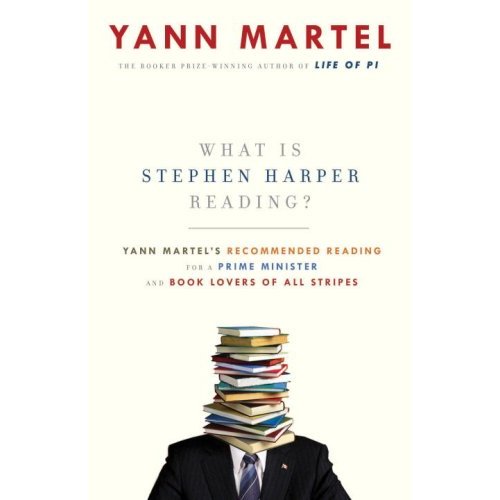
What Is Stephen Harper Reading?

harper

Bruce Meyer has a review of Yann Martel’s What Is Stephen Harper Reading? Frye not surprisingly is included in Martel’s list of recommended works:

The works that Martel has chosen to send to the Prime Minister are wide-ranging in their content and their reader impact. Some have a Canadian angle, from Milton Acorn’s collection of poems The Island Means Minago, or Tomson Highway’s hilarious The Rez Sisters to Voltaire’s Candide, in which it is said that the “French and English are fighting over a few acres of snow.” Others are rather deep but essential reading for any individual who seeks to lead, such as The Meditations by Roman Emperor Marcus Aurelius.

If heavy-duty fare is not to Harper’s taste, there is, buried within the selection, a curriculum of books that would do a high-school student a world of good: Virginia Woolf’s To the Lighthouse, Northrop Frye’s The Educated Imagination (do you think a busy prime minister would take books with him to a desert island?), William Shakespeare’s Julius Caesar, George Orwell’s Animal Farm (though the temptations of barnyard politics should have been foreseen by Martel), Harper Lee’s To Kill a Mockingbird and Jonathan Swift’s A Modest Proposal (just in case funding cutbacks lead to unforeseen menu changes).

Harper has both Bachelor’s and Master’s degrees in economics from the University of Calgary, so it’s hard to imagine that he’s read many of Martel’s recommended works beyond what might have found its way onto his high school reading list more than thirty years ago.  And as he “governs” without Parliament whenever it’s politically expedient for him to do so — witness two dubious prorogations of Parliament in one year — it’s a stretch at this point to think of him reading much beyond tracking polls and various public relations scenarios intended to convince skeptical Canadians that he really is just a cuddly moderate.  Thanks to Harper, we only occasionally have full parliamentary representation in this country.  But in its place we do have tightly-scripted government funded feel-good ad campaigns!  It’s difficult to conceive of Harper as being anything other than a narrow special interest politician with big oil behind him.  But please note that Canada is a signatory of the Kyoto Protocol and has legal obligations to meet its targets.  And yet, Canadian greenhouse emissions currently exceed by 35% our commitment to reduce them. That is, we are 35% above our Kyoto targets to reduce below 1990 emissions levels. Under Harper, we are not reducing our emissions.  We are increasing them.  The Alberta tar sands produce some of the most environmentally degrading oil it is currently possible to produce.  With just .5% of the world’s population, we account for 2.5% of the world’s carbon dioxide emissions, with a rise that has topped out at 20% during the Harper years.  Per capita, we are among the very worst carbon polluters in the world.  It’s therefore not hard to see who Stephen Harper is and what he really represents.  Whatever he’s reading, it’s clearly not what he needs to be.

Is this also a good time to point out that Liberal leader Michael Ignatieff is likely to have read most of if not all of the books that Martel recommends?  Ignatieff, in contrast to Harper, is the recipient of 11 honorary degrees thanks to his extensive scholarly output over the years, including teaching posts at Oxford, Cambridge, the London School of Economics, and Harvard.  Ignatieff has written a number of books, which include scholarly works, popular works of social concern, three novels and even a couple of screenplays.  You can see Ignatieff’s bibliography here.  There is no bibliography of books written by Stephen Harper.