Author Archives: Michael Happy

Michael Dolzani: “The View from the Northern Farm”

fp-logo

Michael Dolzani’s 2004 talk to the Frye Festival, “The View From the Northern Farm: Northrop Frye and Nature”, is now posted in the Frye Festival archive in the journal.  You can link to it directly here.

A sample:

My title is inspired, if that is the word, from the fact that the name “Northrop” apparently means “northern farm.”  In fact, the name-book whence the information derives lists Northrop Frye as the most famous instance of the name.  When I first learned of this, I thought it was a bit ironic.  Northrop Frye’s sensibility is urban; he belongs to Moncton and Toronto, and does not have much to do with farms.  He is, however, northern, and the etymology got itself linked in my mind with the lyrics to a song called “Farmhouse,” from an album of the same title by the rock group Phish.  In the song, the speaker begins by saying, “Welcome, this is a farmhouse.”  But he quickly goes on to apologize that “We have cluster-flies, alas / And this time of year is bad. / We are so very sorry, / There is little we can do / But swat them.”  The failure of nature seems linked to the failure of human relationships, and the failure of relationships in turn to the failure of community, as the speaker drifts from alluding to a lover who walked out on him to the observation that “Each betrayal begins with trust, / Every man returns to dust.”  Then, unexpectedly, an anthem-like refrain erupts with a complete reversal of the meaning of this melancholic farmhouse:  “I never saw the stars so bright, / In the farmhouse things will be all right.”  This reversal, or, to use Frye’s term, recreation of the vision of inhospitable nature and selfish human nature is the subject of my talk.  The direction of the reversal is from a “realistic” perspective allied with both common sense and scientific materialism to what Shakespeare in Twelfth Night calls “A natural perspective, that is and is not.”  The latter is the perspective that we call imaginative and spiritual.  It both is and is not because it begins as a fiction, and yet, unlike mere wish-fulfillment fantasies, has the potential to transform what the poet Wallace Stevens called “things as they are.” The fact that Frye, like Stevens, with various qualifications, grants authority to both perspectives gives him the title of his last book, The Double Vision.

Phish’s “Farmhouse” after the jump.
Continue reading

Milton Acorn

acorn

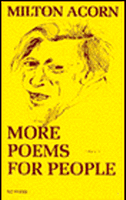
Today is also “the people’s poet” Milton Acorn‘s birthday (1923 – 1986).

Here’s Acorn on Frye in what is arguably a Menippean satire, “On Not Being Banned By Nazis…” in More Poems for People:

After all, the fascist poet, Ezra Pound,

Who continues to pass off his preposterous

common and dull Cantos as very profound, also condemned

Academics. The fast-rising patriotic poet

Robin Mathews is a professor.  Pound was not.

Obviously, when I was saying academics, I meant some-

thing else.

I now realize that what I meant was “Imperial

Academics” – such as Northrop Frye, who in the past did

more than any other man to abolish everything native

and non-European in our literature.

Filmed interviews with Al Purdy and Milton Acorn on poetry and socialism after the jump.

Continue reading

Paul Verlaine

PortraitParCourbet

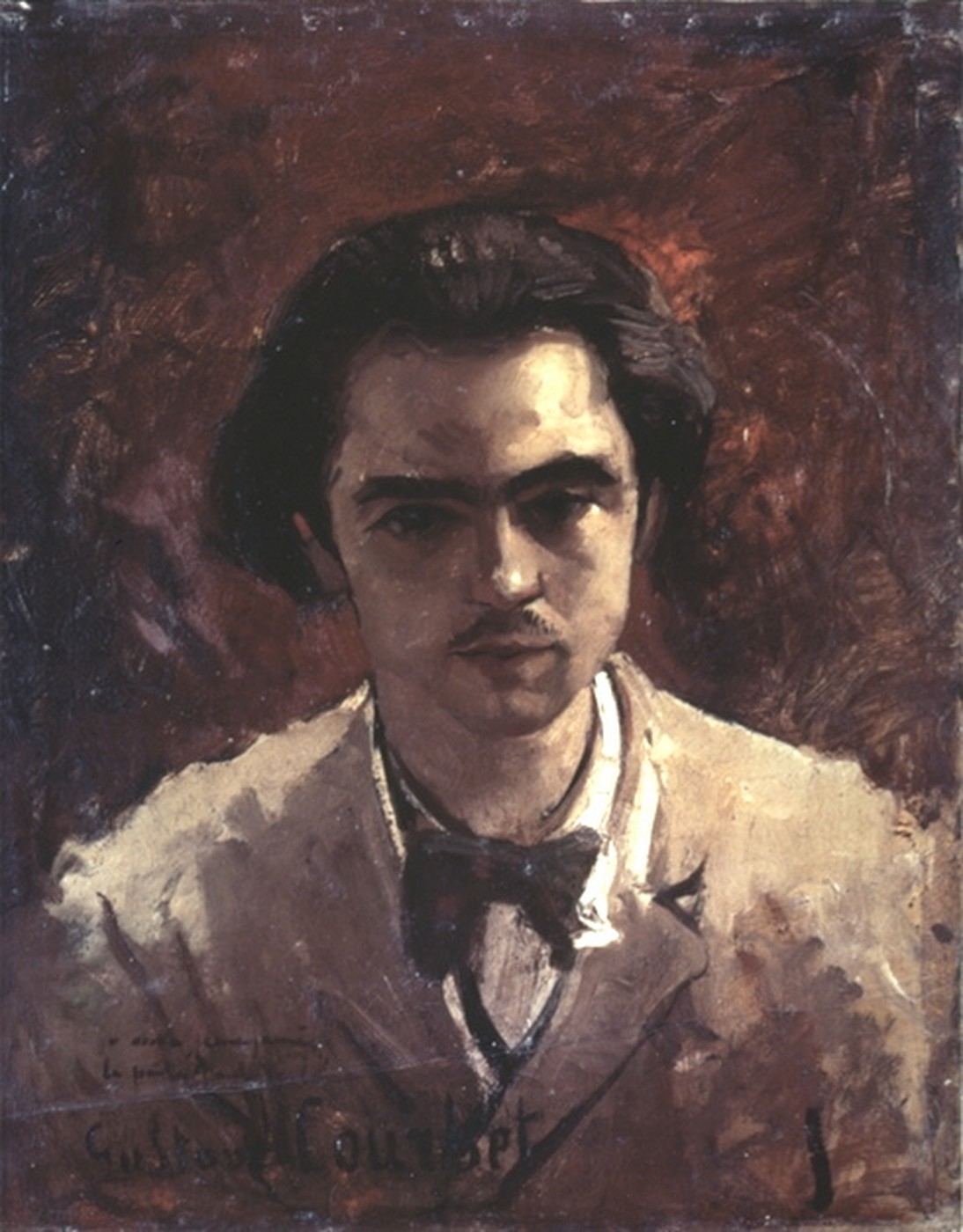
Portrait of Paul Verlaine by Gustave Courbet

Today is Paul Verlaine‘s birthday (1844 – 1896).  We hate to chuckle at his expense on today of all days, but this entry from Frye’s 1942 diary is too good to pass up:

About this Rimbaud-Verlaine idea: I’d have to make something more exciting out of Verlaine than he actually was.  I get fed up with those people who act like bad little boys & finally collapse into the bosom of Mother Church, with a big floppy teat in each ear, and spend the rest of the time bragging about what bad little boys they used to be and how pneumatic the bliss is.  Rimbaud stayed tough. (Diaries, 18)

Glenna Sloan: “Northrop Frye in the Elementary Classoom”

Talescover

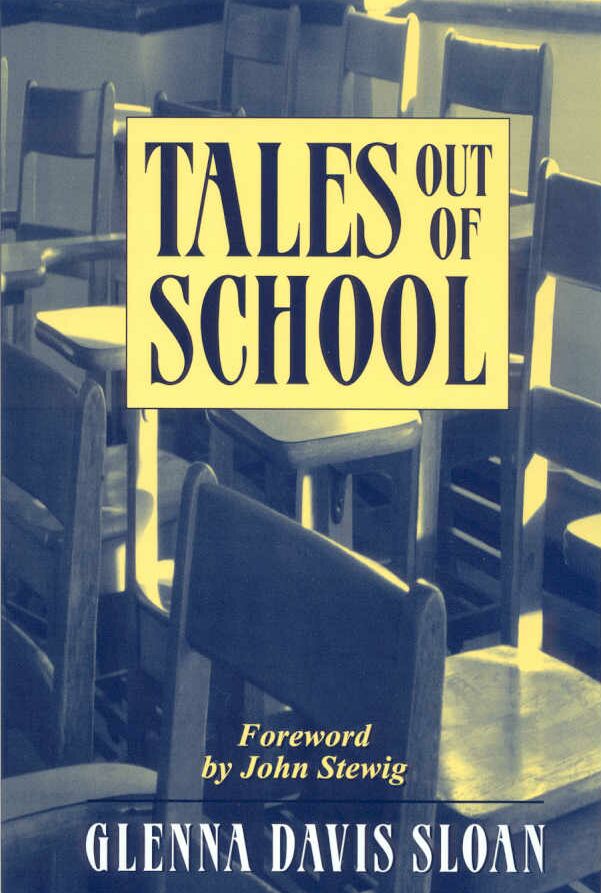
We are very pleased to add to the Denham Library Glenna Sloan’s “Northrop Frye in the Elementary Classroom,” a speech she gave to the Canadian Literature Symposium on Northrop Frye in 2007.  You can link to it directly here.

Glenna brings what we very much need here: a consideration of Frye as a teacher, which, of all the remarkable roles he played, he considered the most important.

Here’s a sample:

I begin with indoctrination. I preach the gospel according to Frye in an effort to save teachers from the false teachings of the reading industry. These include the notion that how children read is more important than what they read, that fragmenting the reading experience through inane drills of so-called sequential skills is the way to develop literacy. The reading pundits insist that suitable early reading material must be dumbed down or, as they say, leveled, an unfortunate word which means written in limited vocabulary deemed appropriate for the reader’s age. I refer to Professor Frye’s blistering critique of Harcourt’s Adventure series of basal readers when I insist that genuine literature is far and away the most effective reading program ever devised.

In an interview with me, Professor Frye said: “As you read and write from the basis of literature, eventually you realize that there is a difference between learning to read and write at the minimum standards of literacy and being able to write with some power of articulateness and to read with some sense of direction. So the teaching of literature is the teaching of reading and writing. And what you’re aiming for here is the transfer of imaginative energy from literature to the reader” (University of Toronto, February 23, 1970).

Visit Glenna’s website, Children’s Literature and Literacy

Frye Alert

httpv://www.youtube.com/watch?v=bebHG–W8s0

The closing sequence of 32 Short Films About Glenn Gould

The Australian blog Art Neuro today mentions Frye while praising Canadian culture, and Canadian film especially:

Nobody says it out loud, but Canada is the cultured, well-educated, bookish, serious  brother to the sporty, happy-go-lucky, pretentious Australia. Here’s something for people to chew on: the film that kicked off the Australian film renaissance in 1970 was ‘Wake in Fright’, directed by Ted Kotcheff who is a Canadian.

Canada is the land of Glenn Gould and ‘32 Short Films About Glenn Gould’. Australia is the land of David Helfgott and ‘Shine’. Their premier pianist defined the playing of Bach for generations to come. Our pianist is a guy who had a breakdown trying to play Rachmaninoff’s third and went crazy. The movie about their guy is one of the most significant biopics of all time. Our biopic is an Oscar winner but really just another movie.

Another Canadian, John Ralston Saul is a front line top of the heap intellectual. We don’t have anybody who can go toe to toe with John Ralston Saul. Canada produced Northrop Frye. We don’t have a single literary critic that can hold a candle to Northrop Frye, then or since.

You can read the entire post here.

Also, PDF Database offers a number of Frye related PDFs here.

Stephen Leacock

leacock

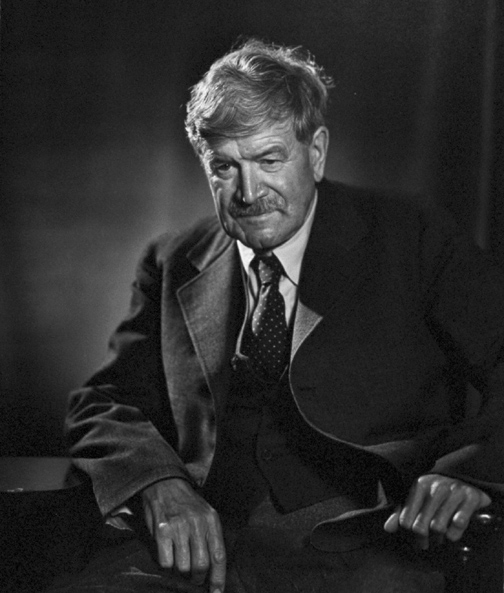
Stephen Leacock, photographed by Yousef Karsh, 1940

On this date in 1944 Stephen Leacock died of cancer at age 74.

Frye regularly refers to Leacock’s Lord Ronald from Nonsense Novels, the hero who is always riding off in all directions.  He nicely utilizes the figure here to characterize Canada’s unusual cultural development during its colonial period:

Canada had no enlightenment, and very little eighteenth century.  The British and the French spent the eighteenth century in Canada battering down each other’s forts, and Canada went directly from the Baroque expansion of the seventeenth century to the Romantic expansion of the nineteenth.  The result was the cultural situation that I tried to characterize in my earlier conclusion [to Literary History of Canada].  Identity in Canada has always something about it of a centrifugal movement into far distance, of clothes on a growing giant coming apart at the seams, of an elastic about to snap. Stephen Leacock’s famous hero who rode off rapidly in all directions was unmistakably Canadian. This expanding movement has to be counterbalanced by a sense of having constantly to stay together by making tremendous voluntary efforts at intercommunication, whether of building the CPR or hold federal-provincial conferences. (“Conclusion to the Second Edition of Literary History of Canada“, CW 12, 454.)

Leacock’s “The Marine Excursion of the Knights of Pythias” from Sunshine Sketches of a Little Town can be read here.