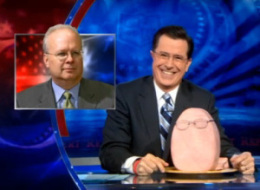
Rove, Colbert, and a canned ham with glasses
“Karl Rove’s new book: Courage and Consequence. Like Pride and Prejudice. Just more prejudiced.”
Stephen Colbert, The Colbert Report
Rove, Colbert, and a canned ham with glasses
“Karl Rove’s new book: Courage and Consequence. Like Pride and Prejudice. Just more prejudiced.”
Stephen Colbert, The Colbert Report
httpv://www.youtube.com/watch?v=WT92QQyRfT0
“Caro Nome,” Maria Callas
On this date in 1851, Verdi’s Rigoletto premiered in Venice.
March premieres were obviously the fashion in Italy back in the day.
Because any educated imagination is willingly engaged with the (cough) “real world” — which is really only the awful place where awful things happen to people on the nausea-inducing assumption that it is necessary — it will also bear witness to a truly depraved mind.
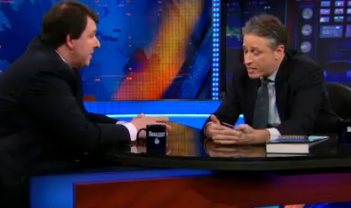
Marc Thiessen was on Jon Stewart’s show last night. Thiessen is a former Bush speech writer, a tireless apologist for torture, and now a “columnist” for the Washington Post, a once great newspaper being run into the fevered swamps of neoconservative paranoia by editor Fred Hiatt. It is a stomach churning experience to listen to someone like Thiessen and to know he wields power and influence. But it serves as a reminder of just how wretched a place such a world is — and why. For the rest of us, it’s got to be about vigilance. We can start by making a point of knowing what the rogues, the frauds, and the closet sadists are actually up to.
In Canada, the entire unedited interview can be seen here. In the rest of the world, it can be seen here.
Update: From then-Vice President Henry A. Wallace on “American fascism” in 1942:
The American fascist would prefer not to use violence. His method is to poison the channels of public information. With a fascist the problem is never how best to present the truth to the public but how best to use the news to deceive the public into giving the fascist and his group more money or more power.

First, Bob has provided us with his delightful 1985 correspondence in the persona of Frye with two colleagues then teaching at the University of North Carolina, William Harmon and Louis D. Rubin. It can be read here.
Second, a collection of images of Frye, some photographs (particularly of the young Frye, like the lovely photo above of Helen and Norrie taken in 1937), but mostly caricatures, including those done by the recently deceased David Levine of the New York Review of Books. You can see them here.
This is a good time to remind you that we are slowly but surely digitizing a collection of Frye audio and video, some of which has never been made public before. We hope to begin posting it in the spring.
httpv://www.youtube.com/watch?v=4BZSqtqr8Qk
Chorus of the Hebrew Slaves, “Va, pensiero”
On this date in 1842, Verdi’s Nabucco premiered in Milan and secured the young composer’s reputation.
httpv://www.youtube.com/watch?v=GrKYtGzZywo
On this date in 1853, Giuseppe Verdi’s La traviata premiered in Venice. It was initially a failure and was extensively revised. The revised version premiered three years later in London.
Above, the finale from Franco Zeffirelli’s film adaptation.
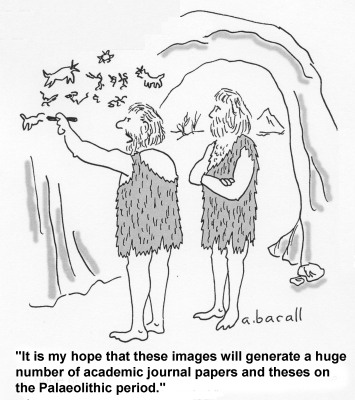
Our collection of papers in the journal continues to grow. We have just added Johanne Aitken’s “Making Human Sense: The Changing Influence of Northrop Frye’s Literary Theory Upon the Literary Experience of Children”. We have also added to the library a lecture by Bob Denham delivered at Western Washington University in 2003, “Frye and Practical Criticism: Against the Grain”.
Soon to be a major motion picture starring Keira Knightley and Dame Judi Dench. For real! Extended preview:
httpv://www.youtube.com/watch?v=j_gh-maRlw8&feature=fvw
See the movie, read the book!
Video promo for the book after the jump.
Update: Jonathan Allen reports that he’s currently working on a paper on Pride and Prejudice and Zombies. We look forward to reading it.
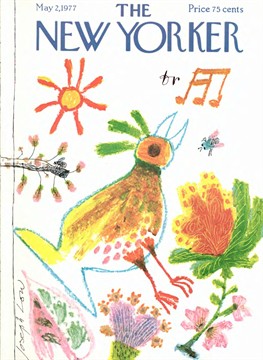
The May 2nd, 1977 issue of The New Yorker, in which “The Kugelmass Episode” first appeared.
Responding to comments by Joe Adamson, Clayton Chrusch, and Matthew Griffin
Bob Denham points out that in the latter part of his career Frye virtually ceased using the word “archetype.” But, thanks at least to Anatomy of Criticism, it is a term that will always be associated with him — that third essay, “Archetypal Criticism: Theory of Myths” will likely remain a centerpiece, re-read and contemplated anew (not to mention misread and summarily dismissed) apart from everything else. But, of course, Frye is not really a modular thinker: you can’t take a small piece of him and say, “This is it in a nutshell.” The best you can do is to identify some aspect of Frye and extrapolate the rest of his critical outlook from it. (A. C. Hamilton, for example, claims that he can reconstruct all of Frye from a single phrase, the way a paleontologist might reconstruct an entire dinosaur from a bone fragment.)
This discussion thread began with the young Frye’s love of The New Yorker, so it’s nice bit of symmetry that we can return to the May 2nd, 1977 issue to round it out. In that issue, Woody Allen published what may be one of his best short stories, “The Kugelmass Episode” (the full text of which can be read here). In it, a humanities professor at CUNY named Kugelmass with an infatuation for Emma Bovary discovers a magician who can transport him into the novel where he becomes one of Emma’s lovers, and then snatches her away to attend the Academy Awards ceremony wearing a chic Ralph Lauren pantsuit (it’s 1977, remember). In a cutaway sequence, the scene briefly shifts:
“I cannot get my mind around this,” a Stanford professor said. “First a strange character named Kugelmass, and now she’s gone from the book. Well, I guess the mark of a classic is that you can reread it a thousand times and always find something new.”
That sense of finding “something new” in a work read “a thousand times” we might call the “Kugelmass effect.” It is suggestive of the fact that archetypes are constant but not reductive or static. They are expansively associative and ultimately unfold a vision of the world that, as Frye points out, is always “new” — however many times it has been rendered — because it has never been realized. It is what makes works of art “innocent” (as he puts in in The Educated Imagination), despite the cruel and unjust social conditions that produced them. It’s why we cannot read a work of literature just once and exhaust its imaginative possibilities. And it is surely why writers can and do (whether consciously or unconsciously, whether they freely admit to it or vehemently deny it) employ archetypes and still render them unique to the particular circumstances of the work at hand.
In Words with Power Frye explicitly identifies the literary experience as “visionary” and “prophetic.” But he’d always argued as much. To see the world in a grain of sand is to see everything in what is otherwise almost nothing, and to see it recreated in what is otherwise mundane. It is “primary concern” raised to the level of the “concrete universal” — everywhere, all at once, and all of the time.
httpv://www.youtube.com/watch?v=-4kTei0XrCs
Today is Vivaldi‘s 332nd birthday. Yes, it may be one of the most overplayed pieces of music ever (most especially in independently operated bookstores!), but there’s a reason for that. This version is delightful and full of surprises, even for those who think they’ve heard the thing one time too many.