
Story in the Varsity here.
Story in the Varsity here.

Vote for the Frye sculpture here: http://www.refresheverything.ca/fryefestival We seem to have slipped over the last 24 hours into fifth place. But you can vote daily until August 31. So please do so. Remember that you must be signed in before you vote can be registered.
Dawn Arnold of the Frye Festival has set up a “voting team” to submit votes for people who may be away on vacation but still wish to register their votes. Contact her at dawn@frye.ca
httpv://www.youtube.com/watch?v=cJ5GoHfnbls
Petrarch’s “Giunto Alessandro”
Today is Petrarch‘s birthday (1304-1374).
Frye in “The Survival of Eros in Poetry”:
There is no need to rehearse in detail the familiar story of courtly love in medieval poetry. Influenced largely by Virgil and Ovid, the poets worked out an elaborate correspondence between sexual love and Christian agape. One might be living one’s life carelessly, in complete freedom from the perturbations of love; then the God of Love, Eros or Cupid, would suddenly strike, and from then on one was Love’s abject slave, supplicating the favour (usually) of a mistress. Sometimes, as in Dante, the cult of Eros is sublimated, in other words assimilated to the Christian one. It is Eros who inspires Dante with his vita nuova that started from his first sight of Beatrice, but Beatrice in the Paradiso is an agent of divine grace. In another medieval epic, however, The Romaunt of the Rose, the climax of the poem is clearly sexual allegory, and in Petrarch, who did far more than Dante to popularize the theme, at least in English literature, love for Laura is rooted in Eros throughout, even though again it is sublimated, involving no sexual contact and easily surviving death. (CW 18, 255)
Translation of the poem after the jump.

We seem to be getting a lot of traffic from people interested in following developments with the Centre for Comparative Literature.
Please note that we have created a distinct Category to accommodate such people.
You’ll see the live link at the end of this post. Simply hit it, and all the posts — including all the external links we’ve gathered so far — will come up on a dedicated page.
If you have come across something you think we should know about on this or any other topic, just drop us a line via a Comment or an email: fryeblog@gmail.com
Become a fan. Hit the Frye Facebook link in the top right hand corner of our widgets menu.
Your daily reminder about the two issues we’re really pushing these days.
If you have not already signed the Save Complit Centre petition, you may do so here: http://www.petitiononline.com/complit/petition.html
You may also visit the Save CompLit Facebook page here: http://www.savecomplit.ca/Protest.html
*
Remember also to VOTE DAILY for the Northrop Frye Sculpture here: http://www.refresheverything.ca/fryefestival
We are currently in 4th place. We need to finish first or second to receive the $25,000 prize.

“Ballet Dancers on the Stage”
Today is Edgar Degas‘ birthday (1834-1917).
Frye in notebook 31:
Aesthetics seems, as I say, to rest on the fallacy of idealized forms. We idealize a slender, youthful naked woman’s body & call that beautiful, so when Degas claims for “beauty” a study of haggard ironing women or thick-arsed middle-aged matrons washing their hairy privates, we get horrified. One of the functions of satire is to break down these external theories of beauty, which at bottom are always theories of property & decorum. (CW 15, 91)
Frye in The Modern Century, “Improved Binoculars”:
Impressionism portrays, not a separated objective world that man contemplates, but a world of power and force and movement which is in man also, and emerges in the consciousness of the painter. Monet painting Rouen cathedral in every aspect of light and shade, Renoir making the shapes in nature explode into vibrations of colour, Degas recording the poses of a ballet, are working in a world where objects have become events, and where time is a dimension of sense experience. (CW 11, 32-3)
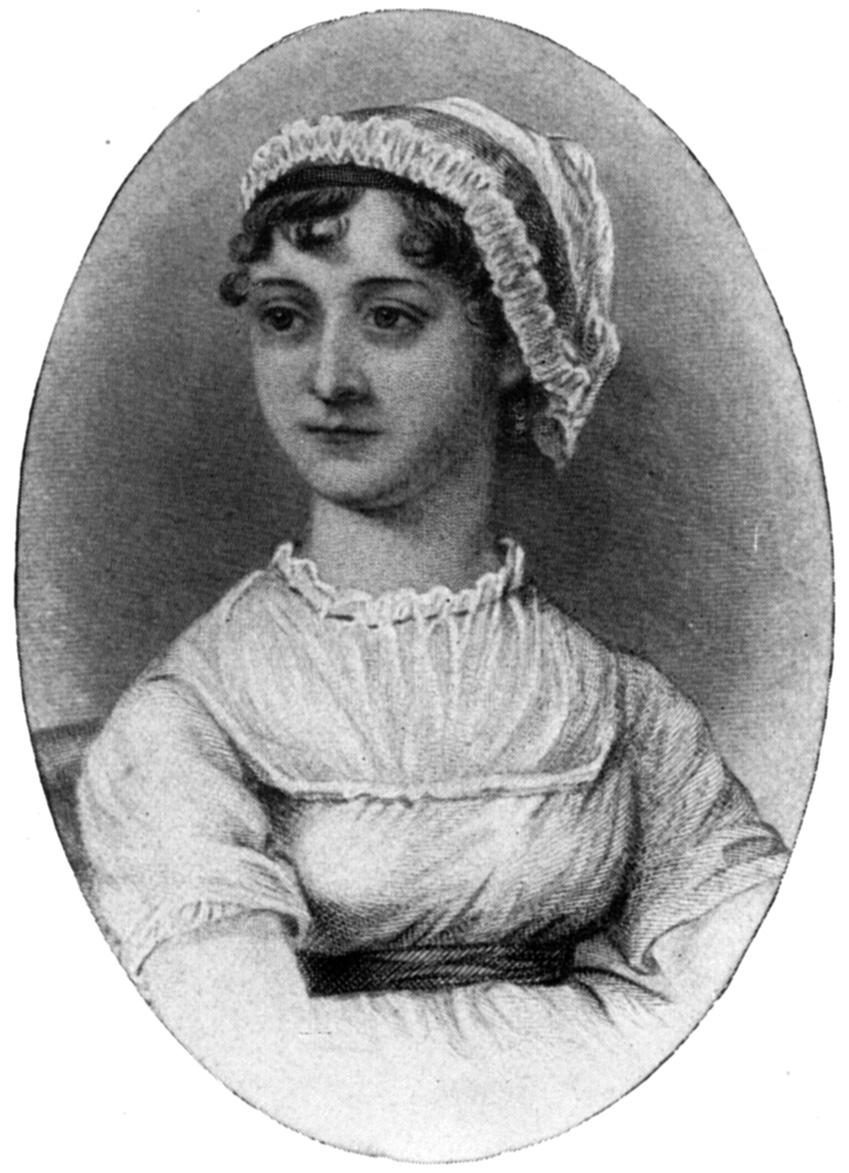
On this date Jane Austen died (1775-1817).
Frye in notebook 27:
I’ve often noticed that great novelists, from Jane Austen to Henry James, are conventional to the point of prissiness. There are many reasons for this: one is that novelists deal with people under ideology. The ideology is usually shaped by both the author and the public. Authors who are aware of another perspective (myth) are rare: Dickens is one. (CW , 95) LN
In “Framework and Assumption”:
At present there is a widespread impression that flexible conventions are a mark of serious writing. The days are gone when Jane Austen could protest against the snob phrase “only a novel,” and point out that a “novel” could be on the same level of seriousness as any book of sermons. But of course she had her conventions: there are no writers who are unconventional or beyond convention. Sometimes a writer may seem unconventional because his readers are accustomed to different conventions and do not realize it, or else assume that what they are used to is the normal form of writing. Such reactions to convention may vary from Samuel Johnson’s dictum, “Nothing odd will do long; Tristram Shandy did not last,” to the claim of a twentieth-century formalist critic that Tristram Shandy was the most typical novel ever written. (CW 18, 424-5)
In “The Context of Romance” in The Secular Scripture:
The sketches Jane Austen produced in her teens are nearly all burlesques of popular romantic formulas. And yet, if we read Pride and Prejudice or Emma and ask the first question about it, which is What is Jane Austen doing? What is it that drives her pen from one corner of the page to the other? the answer is of course that she is telling a story. The story is the soul of her writing, to use Aristotle’s metaphor [Poetics chap. 6], the end for which all the words are put down. But if we concentrate on the shape of her stories, we are studying something that brings her much closer to her romantic colleagues, even to the writers of the horrid mysteries she parodied. Her characters are believable, yet every so often we become aware of the tension between them and the outlines of the story into which they are obliged to fit. This is particularly true of the endings, where the right men get married to the right women, although the inherent unlikelihood of these unions has been the main theme of the story. All the adjustments are made with great skill, but the very skill shows that form and content are not quite the same thing: they are two things that have to be unified. (ibid., 28)
httpv://www.youtube.com/watch?v=J53feA5e5SM
The Circus (1928) seems to be regarded as Chaplin’s “little-seen masterpiece,” so let’s see it.
Frye in “The Eternal Tramp” (1947):
Chaplin’s tramp is an American dramatic type, and Rip Van Winkle and Huck Finn are among his ancestors. The tramp is a social misfit, not only because he is too small and awkward to engage in a muscular extroverted scramble, but because he does see the point of what society is doing or to what purpose it is it is expending all that energy. He is not a parasite for he possesses some occult secret of inner freedom, and he is not a bum, for he will work hard enough, and still harder if a suitable motive turns up. Such a motive occurs when he discovers someone still weaker than himself, an abandoned baby or a blind girl (students of Jung will recognize the “anima” in Chaplin), and then his tenderness drives him to extraordinary spasms of breadwinning. But even his normal operations are grotesque enough, for in the very earnestness with which he tries so hard to play society’s game it is clear that he has got it all wrong, and when he is spurred to further efforts the grotesqueness reaches a kind of perverse inspiration. The political overtones of this are purely anarchist — I have never understood the connecting of Communism with Chaplin — the anarchism of Jefferson and Thoreau which sees society as a community of personal relationships and not as a mechanical abstraction called a “state.” But even so the tramp is isolated by his own capacity for freedom, and he has nothing to do with the typical “little guy” that every fool in the country has been slobbering over since Pearl Harbor. (CW 11, 117)

Vote daily for the $25,000 prize to construct the Northrop Frye sculpture here: http://www.refresheverything.ca/fryefestival
As always, remember that you must be signed in before your vote counts.