Author Archives: Michael Happy

Centre for Comparative Literature: Globe & Mail Editorial

gam_flag

Globe Editorial

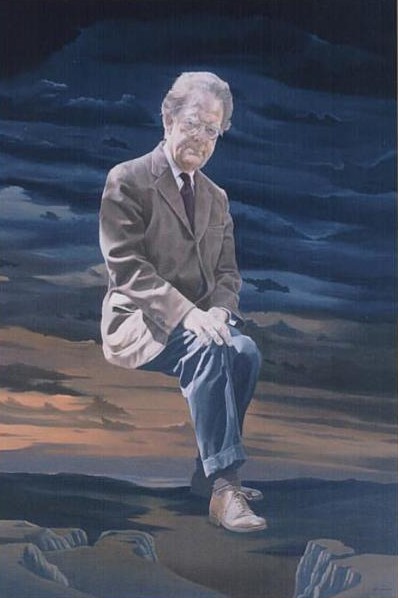
Northrop Frye’s greatest gift: his books

Northrop Frye was not much attached to the term “comparative literature,” and it would be a mistake to gather that his legacy is embodied in any academic institution.

From Saturday’s Globe and Mail

Northrop Frye was not much attached to the term “comparative literature,” and it would be a mistake to gather, from a controversy at the University of Toronto about the merger into a larger entity of that university’s Centre for Comparative Literature, which he founded, that his legacy is embodied in any academic institution.

Rather, Professor Frye left us his books, especially three of them.

Fearful Symmetry: A Study of William Blake (1947) is a strange book for a scholar starting out in his career; as has often been said, it is hard to tell whether one is reading views that Prof. Frye attributes to Blake, or Prof. Frye’s own; the reserved intellectual seems to have become fused with the prophetic poet.

The Great Code (1982) may have gone as far as anyone could in wrestling with the relationship between literature and the collection of Jewish and Christian writings often called “the Bible” – but the fact that its second part, Words with Power, took eight more years to appear (almost his last book) may have disclosed the unwieldiness of the premise of “the Bible as literature.”

Paradoxically, it is a book with an even more ambitious scope that is his best work. Anatomy of Criticism (1957) is a comprehensive account of literature as a whole. It might be accused – falsely – of being an arid, rigid classification system, but an English critic, Frank Kermode, was right when he wrote that this work of literary criticism had turned into literature.

That was an understatement. The intense shape that rules Anatomy of Criticism makes it a work of art, one with an overstrained hypothesis that is compelling and fruitful, a book of vision – it does not compare one national literature with another, though examples are drawn from far and wide.

Instead, Prof. Frye tried, as he put it, to “postulate a self-contained literary universe,” but toward the end of the Anatomy he took a new turn, finding that some prose writings which were intended to persuade, but were somehow literary – such as Milton’s Areopagitica and the Gettysburg Address – went beyond any such independent realm, so that the literary cosmos “expanded into a verbal universe,” in which literature is analogous to mathematics.

These are daring conceptions. Someone who has read Anatomy of Criticism cannot read any literary book in quite the same way thereafter. It is a great Canadian book – more of a heritage than any centre or department.

Link directly to this editorial here.

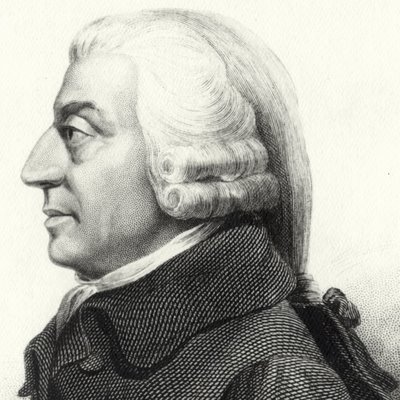
Adam Smith

adamsmith

Adam Smith died on this date in 1790 (b. 1723).

Frye in “Varieties of Eighteenth Century Sensibility”:

We saw that Locke, like Descartes before him, based his philosophy on a philosophical man abstracted from his social context, in short, a theoretical primitive.  Also that Robinson Crusoe was an allegory of another abstract primitive, the economic man of capitalist theory, whose outlines are already fairly complete in Adam Smith.  These are the individual primitives at the core of Augustan culture.  But such primitives have voluntarily entered a social contract and a historical tradition.  For this attitude nothing in the area of culture can develop except on the other side of the social contract: literature and the other arts are rooted in a historical context in both time and space.  (CW 17, 33)

Quote of the Day

fryeinthesky

“Derrida says that structuralism is wrong because you can’t get outside of a structure to examine it.  That’s a misleading metaphor: you enter a structure from the ‘inside’ & it becomes a part of you.  Only it doesn’t stop with an individual, but becomes a spiritual substance: it’s one’s infinite extension.”  (CW 5, 220)

Frye and Derrida

norrie1 jacques-derrida

As Bob Denham pointed out in his post the other day, Frye is sceptical of and occasionally hostile to post-structuralism generally and to Derrida specifically in the notebooks, but is more conciliatory in his published work and, as we saw yesterday, in interviews.  He even suggests the possibility of consensus from time to time.  In the introduction to Words with Power he observes that despite the variety of critical schools on the scene there is nevertheless “an underlying consensus of attitude” that could still “progress toward some unified comprehension” of literature (xviii).  What this underlying consensus of attitude might be is not entirely clear from anything Frye has to say about the matter, and it is of course easier to think of him and Derrida — who is obviously much on Frye’s mind in Words with Power — as irreconcilable.  The critical vocabulary each uses only heightens the sense of opposition: Frye considers metaphor a statement of identity, Derrida a relation of differences; Frye emphasizes presence, Derrida absence; and where Frye sees language leading to kerygma, or “proclamation,” Derrida sees aporia, or “impassable path.”

Frye and Derrida do, however, have at least one very important thing in common: both reveal the radically metaphorical condition of language.  Frye identifies metaphor and myth as two aspects of the same elementary phenomenon, myth being metaphor as narrative (mythos), and metaphor being myth as a pattern of verbal elements (dianoia).  In The Great Code he says that myth is “implicit metaphor” because it is made up of the juxtaposition of metaphors (59).  Derrida, for his part, in “White Mythology” observes that the “whole philosophical delimitation of metaphor is already constructed and worked upon by ‘metaphors’ … All the concepts which have played a part in the delimitation of metaphor always have an origin and a force which are themselves ‘metaphorical.'” (New Literary History 6, 174)

Why is it then that Derrida’s readings move in the direction of aporia and Frye’s in the direction of kerygma?  The main reason seems to be that Derrida, as suggested by the quote above, is a philosopher offering a critique on the “transcendental signifieds” of the “metaphysics of presence” that make up the assertions of truth which dominate the Western philosophical tradition.  Frye, by contrast, is a literary scholar whose critical principles arise from the inductive survey of literature as an imaginative verbal structure existing for its own sake.  The issue for Frye is not so much an obscure metaphysics of presence as it is the conspicuous presence of metaphor.  Where Derrida sees language reaching for an illusory transcendental signified, Frye perceives the principle of immanent signification which expresses archetypal human concerns whose “reality” is that they are recognizably human.  This distinction between a philosophical and a literary conception of language may provide a useful perspective on the direction literary criticism has taken since Derrida’s appearance on the North American scene in the late 1960s.  Relentlessly changing critical fashion has apparently consigned both Frye and Derrida to the sidelines for the time being, but these two figures nevertheless represent a great divide in literary criticism that was fully apparent about twenty-five years ago and left critical theory and practice the poorer for it.

Deconstruction may have been superseded as a go-to critical tool, but its legacy endures in the Derridian notions of absence, difference, marginality, privileging and totalization, which are hallmarks of the criticisms of gender, class, race and culture that steadily rose to prominence during the 1990s.  The result is that we’ve effectively returned to the state of affairs Frye complained about more than fifty years ago in the Polemical Introduction of Anatomy of Criticism: we are surrounded on all sides by what claims to be literary criticism but which nevertheless regards literature as an allegorical expression of ideological conceptions outside of it.  Literary Darwinism, anyone?  This situation is especially puzzling because we might have expected that Derrida’s influence would only encourage the continued deconstruction of ideology-based criticism.  But criticism, like nature, abhors a vacuum, and (about as reliably as Frye predicted) deconstruction quickly exhausted its potential and we are once again scrambling to figure out just what literature is really “about.”

Continue reading

Centre for Comparative Literature Update

complitbanner1

Events seem to be moving quickly at this point, and we’ll keep you apprised as best we can.  Here, therefore, are the posts that have gone up so far on this issue:

Jonathan Allen discusses the proposal when it first became public two weeks ago here.

Globe & Mail story here.

Bob Denham’s letter to U of T President Naylor here.

Jonathan Allen describes the unique work the Centre does and provides futher links in support of it here.

Natalie Pendergast discusses the closure of the centre in the context of Canada’s wider “cultural famine” here.

Alvin Lee’s letter to the editor of the Globe & Mail here.

Michael Dolzani’s letter to President Naylor here.

Frye Sculpture: Vote Early, Vote Often!

vote

Just a reminder, folks, to vote daily for the Frye sculpture proposal here: http://www.refresheverything.ca/fryefestival

A reminder also that, as Dawn Arnold pointed out yesterday, YOU MUST BE SIGNED IN FIRST IN ORDER TO HAVE YOUR VOTE REGISTER.  The site as it’s designed might fool you.  You can hit the vote button before signing in, but that is not actually a vote, it is just a cue to sign in.  So once you have signed in, hit the vote button a second time.  You’ll know you’ve successfully entered your vote because the vote button will then disappear till the next day, at which point you can vote again.

Remember also that Dawn and her colleagues at the Frye Festival are setting up a “voting team” for those who, because they’re at the cottage for a month or vacationing away, may not have access to the internet and therefore cannot vote.  If you would like to have the voting team vote on your behalf, you can contact Dawn at dawn@frye.ca

Finally, some tangible proof that your votes count.  Over the last 24 hours the Frye proposal has moved from 6th to 4th place.  That matters, because only the first and second place finishers will receive the $25,000 prize.  We’re moving tantalizing close to being one of those top two contenders.

Jacques Derrida

httpv://www.youtube.com/watch?v=dj1BuNmhjAY

An interview with Derrida on love and being. (This video cannot be embedded; click on the image, and then hit the YouTube link that appears.)

Today is Derrida‘s birthday (1930 – 2004).  Here is a selection of Frye’s references to Derrida in various interviews.  (Imre Salusinszky’s interview with Derrida in Criticism in Society here.)

In a 1979 interview, “The Critical Path”:

Herman-Sekulic: What, in your opinion, are the major trends in the theory of literature today?  In what direction is literary criticism heading now?

Frye: I think that the word “direction” is over-optimistic.  I think there is a good deal of mining and blowing up being done, and that after the dust settles the context of a foundation may become visible.  I think Lacan’s conception of the subconscious as linguistically structured is worth following up; so is Derrida’s conception of metaphysical presence; and there are many things that interest me in the work of the new Marxist critics who have got away from the old notion that ideology is something that only non-Marxists have.  But I am not capable of making a unifying theory out of this mess, and I doubt if anyone else is either. (CW 24, 481)

In a 1985 interview, “Criticism in Society”:

Salusinszky: If Bloom has, to some extent, challenged the Christian direction of English literary studies, it is Derrida who has challenged the persistent Platonism that one can also see running through English literary studies.  Criticism has always tended to think of any great literary work as possessing unity, with some sort of closure, and as being, in some sense seminal.  Now Derrida seems to have opened up a whole range of new possibilities, where instead of closure and insemination he has his concepts of dissemination, of trace, of displacement.  Derrida, however, is a philosopher, and I wonder if you regard his present influence as merely one of those enclosure movements which you describe in the Anatomy, as coming from outside and wanting to take it over.

Frye: It certainly seems to be the way his influence has operated, yes, but I don’t think it’s entirely fair to Derrida that it has operated that way.  I think he’s genuinely interested in opening up, as you’ve just said, new possibilities in criticism.  The thing is that I don’t see why the sense of an ending and the sense of wholeness and unity, and the kinds of things he’s talking about, should be mutually exclusive.  I don’t see why you have to have an either / or situation.  It’s like those optical puzzles you look at, which change their relationship when you’re looking at them.  (CW 24, 756-7)

In a 1986 interview, “On the Media”:

Interviewer: What about McLuhan’s distinction between the visual and aural societies?

Frye: It’s very difficult to avoid metaphors.  If, for example, you’re reading something, you frequently use metaphors of the ear.  And that’s what critics like Jacques Derrida are attacking: the convention that somebody is speaking, But, still, when you’re following a narrative, you are in a sense listening.  And then at the end you get a sort of Gestalt: you “see” what it means.  When somebody tells a joke, he leads in by saying, “Have you heard this one?” and then, if he’s lucky, by the end you see what he means.  But these are just metaphors.  The hearing is something associated with sequence and time; the seeing is something associated with the simultaneous and the spatial.  (CW 24, 768)

In a 1987 interview, “Frye, Literary Critic”:

Innocenti: Some new trends in criticism, such as deconstruction, deny that we can reach the meaning of a literary work or even that there is a meaning.  All efforts to interpret are ways to proliferate structures and senses in an infinite chain of nuances and differences.  In my opinion, this sceptical position reduces all criticism to a solipsistic and narcissistic exercise.  In your opinion, do literature and criticism possess a sense that might be saved from nihilism?

Frye: The deconstructionists will have to speak for themselves, but I think the “anything goes” stage is headed for the dustbin already.  Derrida himself has a “construal” basis of interpretation that he starts from, and I think his followers will soon discover that there is a finite number of “supplements” that can be based on that.  In another decade they should have rediscovered the polysemous scheme of Dante, or something very like it.  (CW 24, 827-8)

Continue reading