Author Archives: Michael Happy

Gifts that Keep on Giving

fryechild

This has been a tumultuous Fryeday.  Here then is some welcome news.

First, Ken Paradis of Wilfred Laurier University has posted a paper with us.  Ken’s “Romance Narrative in Conservative Evangelical Homiletic” can be found in the journal here.

Second, The Educated Imagination is now on Facebook.  That’s the link you see at the top of our widgets column to the right.  Just click on it and you’re there.  Give us a little time and we’ll soon be making full use of it as a resource.  By fall we may even be tweeting.

Happy Fryeday, everyone.

Northrop Frye: “There are bigger fools in the world”

norrie&helen

Frye and Helen: the expression on his face is sweetly suggestive of his impassioned letters to her during the 1930s

Today is Frye’s birthday (1912-1991) and an opportune moment to hear what Frye has to say about himself.

His intermittent diaries between 1942 and 1955 contain just two birthday entries.

From his 1942 diary:

Thirty today.  Many good resolutions, most broken already.  (CW 8, 6)

From his 1950 diary while staying at Harvard and writing his seminal “Archetypes of Literature“:

Today was my thirty-eighth birthday.  Helen & I went down to the Harvard Co-operative Store (they call & pronounce it the “Harvard Coop”) & got me a summer suit & a lot of miscellaneous things, socks & tie & so on . . . On the way back I stopped at a liquor store & asked if if there were any formalities about purchasing liquor.  He said the formality consisted only in the possession of cash…

It’s important for me to get along on a concentrated job as soon as possible, because travel, which is said to broaden the mind, only flattens mine.  The exposure of my naturally introverted mind to a whole lot of new impressions confuses me, because I’m more at home with ideas, I’m not naturally observant, and what impressions I do get are random & badly selected.  Also they’re compared with the more familiar environment back home and, as I don’t know the new environment, the comparison is all out of focus. (ibid., 406)

We get much more of this sort of autobiographical detail in his letters, written between the ages of 19 and 24, to Helen Kemp.

Postmarked 14 June 1932:

The Muse is still stubborn.  I have a good idea but no technique.  I have a conception for a really good poem, I am pretty sure, but what I put down is as flat and dry as the the Great Sahara.  I guess I’m essentially prosaic.  I can work myself up into a state of maudlin sentimentality, put down about ten lines of the most villainous doggerel imaginable, and then kick myself and tear the filthy thing up.  However, I got out the book of twentieth-century American poetry from the library and that cheered me up.  There are bigger fools in the world.  (CW 1, 19-20)

Postmarked 25 August 1932:

What I am worried about is my own personal cowardice.  I am easily disheartened by failure, badly upset by slights, retiring and sensitive — a sissy, in short.  Sissies are very harmless and usually agreeable people, but they are not leaders or fighters.  I would make a very graceful shadow boxer, but little more.  I haven’t the grit to look the Wedding Guest in the eye.  “Put on the armor of God,” said a minister unctuously to me when I told him this.  Good advice, but without wishing to seem flippant, I don’t want armour, divine or otherwise — snails and mud-turtles are encased in armour — what I want is a thick skin.  (ibid., 63)

11 October 1933:

You say I am necessary to your existence.  Does that mean:

a) That I am 135 pounds of mashed turnip; something necessary in the way of companionship — somebody to tell one’s troubles to — somebody who will pet you and spoil you and cuddle up to you when things go wrong?

b) That I am a condiment, bringing a sharp tang and new zest to existence, reminding you of the world, the flesh and the devil, and so humanizing you?

c) That I am a stimulant, helping to correlate your activities, encouraging your talents and spanking you for your weaknesses?

d) Or, that I am a narcotic, a drug, very powerful, to be taken, as you say, in small doses, temporarily relieving you, like a headache powder, from your ethereal worries by plunging you into an orgy of physical excitement which leaves you exhausted and silenced?

e) Or that I am an insufferable bore who stays too late?

f) Or a combination of the above?

You see, being a man, I’m so densely stupid.  I haven’t any sort of intuitive tact.  I am your typical male — whenever you get depressed I don’t know anything except what I personally want to do — that is, take you in my arms and strike solicitous and protective attitudes.  If there’s any crying to be done, I want it done on my shoulder.  I want to be present and look helpful whenever you are in difficulties.  (ibid., 90)

Continue reading

Frye Alert

fryesculpture

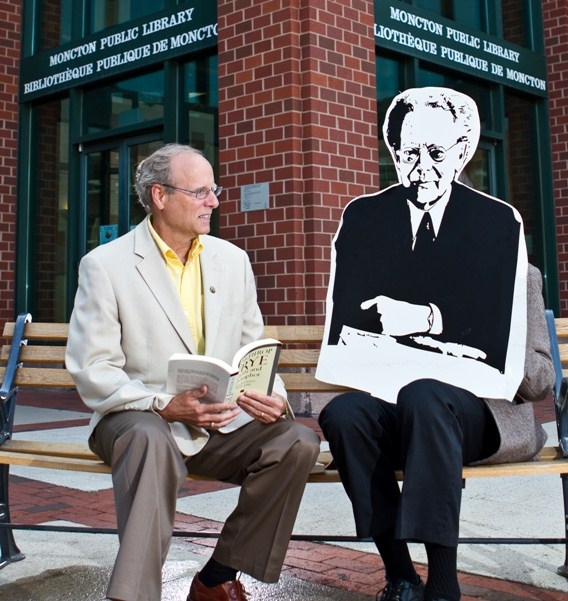
Moncton mayor George LeBlanc chats with Northrop Frye at the site of the future public art display.

For those of you who’ve been voting daily for the proposed Frye sculpture, the proposal now sits in sixth (that’s 6th) place.  Only the top two proposals will receive a $25,000 prize.  So, of course, we’re encouraging everyone to be sure to vote daily.

Happily, Dawn Arnold has simplified the process by providing a direct link to the vote button here: http://www.refresheverything.ca/fryefestival For those of you who’ve already registered with the site and voted, just hit that link, sign in, and then hit the vote button at the bottom of the page.  If you’ve not yet registered or voted, please do so as soon as you can.

And remember: you can vote every day.  So be sure to bookmark that link.

From an article about the proposed sculpture in today’s Times & Transcript:

The city and Downtown Moncton Centre-Ville Inc. have been promoting the idea of more public art in the downtown area and Arnold says now is the time to celebrate Moncton’s most famous son. Arnold says a statue of Frye would feed the imaginations of others in the community, contribute to a more vibrant and visually rich community and celebrate the growing importance of literacy in our society.

The statue would also become a bit of a tourist attraction, a place where people could go to have their photo taken like the Bronze Fonz in Milwaukee, the statue of Winston Churchill in Halifax; or the statue of John Lennon in Havana, which portrays the famous Beatle sitting on a park bench, turning to his left as if in conversation with whomever happens to sit next to him.

Here once again is a direct link to the voting site: http://www.refresheverything.ca/fryefestival

So, go already!

Julius Caesar

httpv://www.youtube.com/watch?v=9H-Kztt6WpM

“Beware the ides of March”

On this date Julius Caesar was born (100 BCE – 44 BCE).  That’s an historical fact.  But history is not all that can be said about Caesar.

Frye in “History and Myth in the Bible”:

The ordinary notion of history and myth is that history really happened; myth is what didn’t happen, at least not in that form.  The historian, we feel, tries to capture the past in the present: if he is writing about Julius Caesar’s assassination, he tries to show us what we might have seen if we had been present at the event.  Truth, in this context, means truth of correspondence: a history, or structure of words, is aligned with a body of actions and is judged true if it is a satisfactory verbal replica of those actions.  But truth of correspondence is not the concern of the literary critic: he deals entirely with verbal forms which are not primarily related to external facts or to propositions, and are never true in that context.  To paraphrase Duke Theseus in Shakespeare, the poet, like the lover and the lawyer, is incapable of telling the truth by correspondence.  So far as truth is involved in poetry, it is contained in the verbal form and provides no external criterion for it.  (CW 13, 17)

Mazo de la Roche

Mazo_de_la_Roche

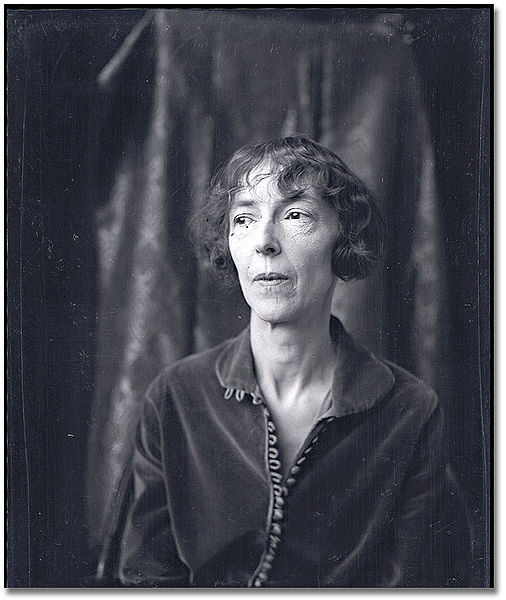
On this date Mazo de la Roche died (1879-1961).

Frye in “English Canadian Literature, 1929-1954”:

The Canadian novelist who is perhaps best known outside Canada is Mazo de la Roche, whose long “Jalna” series of stories began in 1927.  The formidable familiy with which these books deal is well representative of the colonial phase of Canadian development, and of the ability of well-to-do families during that phase to live apart from, and almost in defiance of, the real life of the nation around them.  (CW 12, 248)

In “View of Canada”:

And so we developed that curious streak of anxiety that distinguishes us from other North Americans.  Which we kept trying to sweep under the carpet . . . In the popular Jalna books, Mazo de la Roche manages to make life in Canada seem a pastoral idyll.  The Whiteoaks are a British county family transplanted to the colonies.  (ibid., 470)

Harold Bloom

bloom_harold

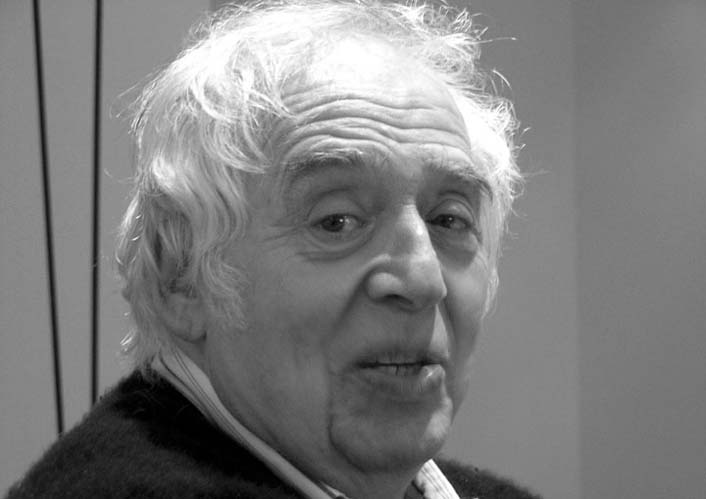
Today is Harold Bloom’s birthday (born 1930).

Bloom has said a lot about Frye over the years, not all of it good or even consistent, but today let’s go with this one:

Frye is surely the major literary critic in the English language . . . . a kind of Miltonic figure.  He is certainly the largest and most crucial critic in the English language since the divine Walter [Pater] and the divine Oscar [Wilde]; he really is that good.

Cited in Robert D. Denham, Northrop Frye Unbuttoned (309).

*

Frye in a letter to Bloom dated 23 January 1969, responding to Bloom’s still developing theory about the “anxiety of influence”:

You don’t say much about the general direction or scope of your book.  If you mean influence in the more literal sense of the transmission of thought and imagery and the like from an earlier poet to later one, I should think that this was simply something that happens, and might be a source either of anxiety or of release from it, depending on circumstances and temperament.  But of course it is true that a great poet’s maturity bring with it a growing sense of isolation, of the kind one feels in Yeats’s Last Poems, Stevens’ The Rock, and perhaps even Blake’s Job series.  I should very much like to hear more about the book and about your progress with it. (Northrop Frye, Selected Letters, 1934-1991, edited by Robert D. Denham, 101)

Frye in a letter to John E. Grant dated 20 May 1975, responding to Grant’s apprehensions about Bloom’s A Map of Misreading:

I am disappointed with Harold’s book: it seems to me such a perverse application of a quite sound critical principle.  You are quite right using the word “anxieties” about him: I’m afraid they’re almost on the point of taking him over. (Selected Letters, 174)

Frye in a letter to Morton D. Paley dated 17 January 1978:

Thanks very much for your offprint of your review of Harold Bloom. I hope it isn’t too arrogant for me to think that I represent Bloom’s chief anxiety of influence; in any case he seems to me to be increasingly isolating himself from the general critical condition, and I find his books progressively less rewarding.  (Selected Letters, 201)

Despite this growing misgiving, however, Frye recommended Bloom for the MacArthur Fellowship (otherwise known at the “genius grant”), which Bloom received in 1985.  (Selected Letters, 262)

Video of the Day

httpv://www.youtube.com/watch?v=JvWfElFuFnM

July 10th, 2010, day 82

From the Associated Press:

NEW ORLEANS — Robotic submarines removed the cap from the gushing well in the Gulf of Mexico on Saturday, beginning a period of at least two days when oil will flow freely into the sea [depicted in the video above].

It’s the first step in placing a tighter dome that is supposed to funnel more oil to collection ships on the surface a mile above. If all goes according to plan, the tandem of the tighter cap and the surface ships could keep all the oil from polluting the fragile Gulf as soon as Monday.

BP spokesman Mark Proegler said the old cap was removed at 12:37 p.m. CDT on Saturday.